Case Study

Maine State Museum

Summary
Interactive touchtable and peripheral "examination stations" that put visitors in the shoes of an archaeologist, uncovering and identifying artifacts from a 200-year-old shipwreck
Client
Maine State Museum
Location
Augusta, Maine
Ship Life Illustrations
Brewster Buttfield

The Maine State Museum’s mission is to share what is meaningful about Maine and its place in the world—through exhibits, collections, and programs that inspire people to discover the state’s past, understand its present, and imagine its future.

In 2026, the Maine State Museum reopened its doors after an in-depth renovation of the Cultural Building, which houses the State Museum, State Archives, and State Library. In addition to updating the building’s accessibility, energy systems, and technology networks, the museum developed plans to open the Lunder Education Center. The center is a space dedicated to play and discovery, where children of all ages can learn about science through an exploration of the museum’s archive of natural artifacts.
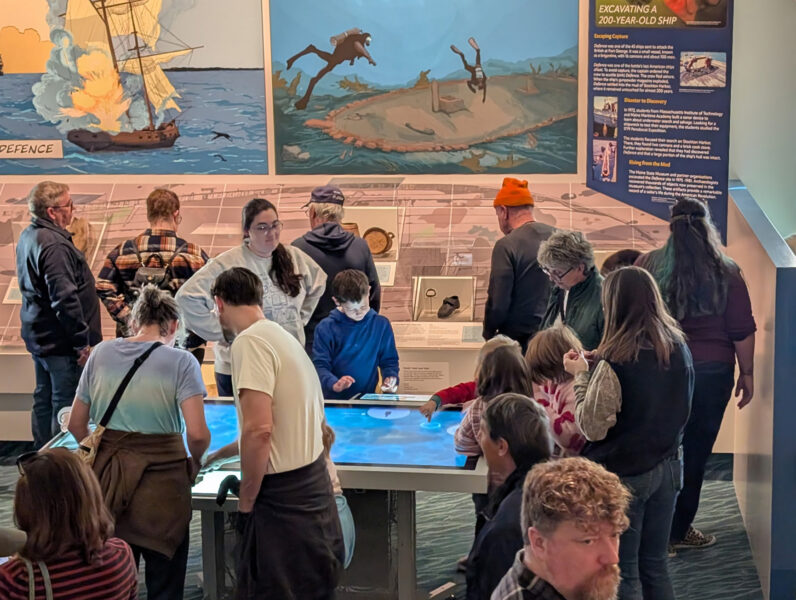
Perch worked with the Maine State Museum on one of the core exhibits in the newly renovated Lunder Education Center: an interactive exhibit featuring the Defence, a wooden brigantine that was built in Beverly, Massachusetts in 1779.

The ship was constructed by colonists to fight against British naval forces during the American Revolutionary War. Shortly after it was built, it took part in a failed siege of Fort George in Penobscot Bay. When American naval forces realized they were outnumbered, they fled up the river and sank the ship to keep it out of British hands.

In the 1970s, a team of archaeologists from the Maine State Museum, Maine Maritime Academy, and the Institute of Nautical Archaeology excavated the wreck of the Defence. Divers discovered numerous artifacts within the shipwreck, which they recovered and painstakingly restored, becoming one of the Maine State Museum’s most important collections.

The museum wanted to showcase the Defence artifact collection, engage visitors in the ship’s history, and share the archaeological process of discovery. To do that, Perch created an interactive touchtable experience that puts visitors in the shoes of a Defence archaeologist learning about newly-excavated, unknown objects from the excavation of the wreck.

IMG_20261027_101727_2
PXL_20261022_225408907
PXL_20261022_224258622
PXL_20261022_221306114_2
PXL_20261022_221352751_2
PXL_20261022_221707884
PXL_20261022_225301784
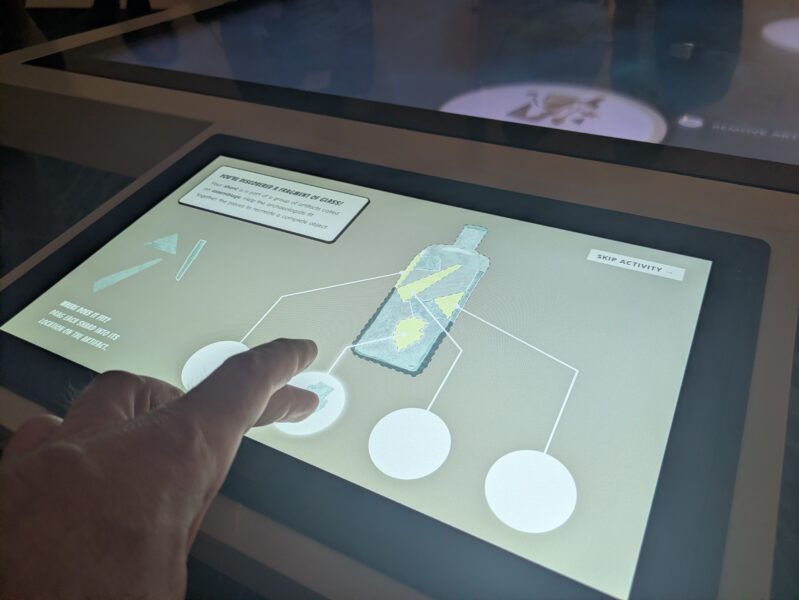
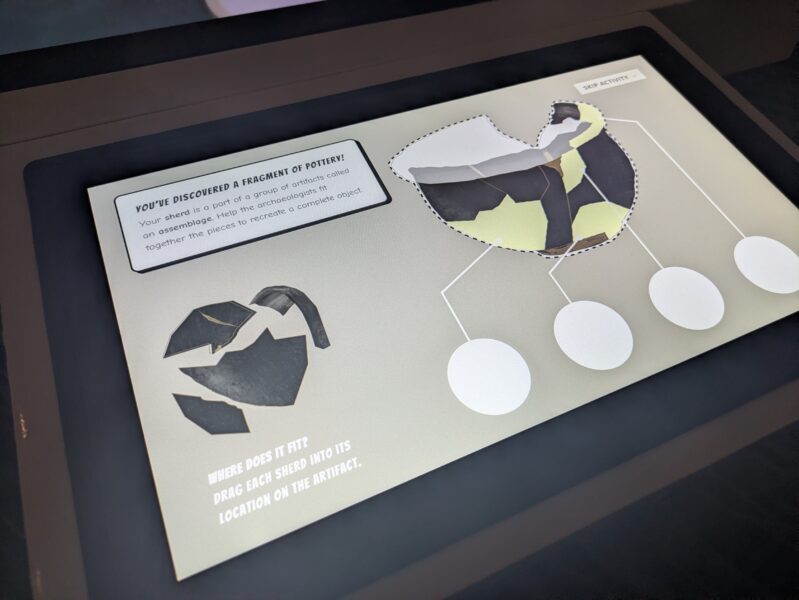
Put yourself in the shoes of an archaeologist and try your hand at this cross-mending puzzle.

Diving for artifacts, playfully uncovering their identity

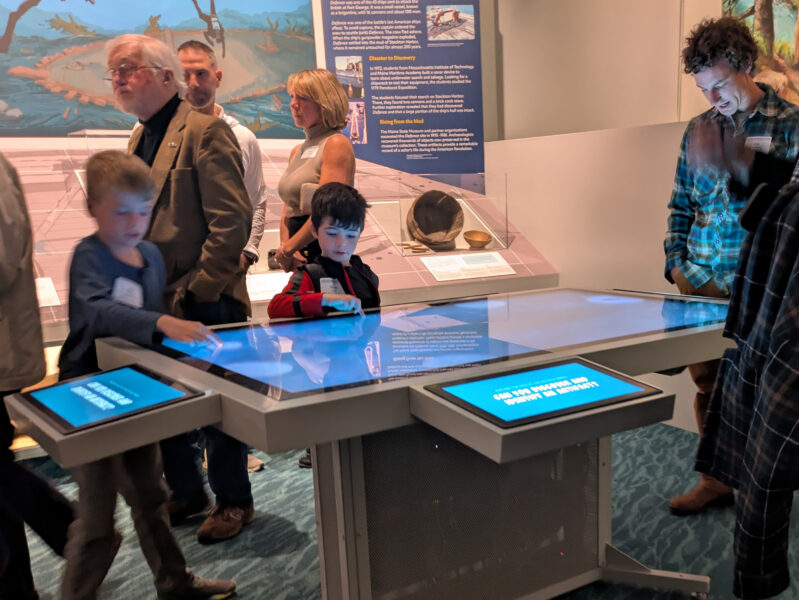
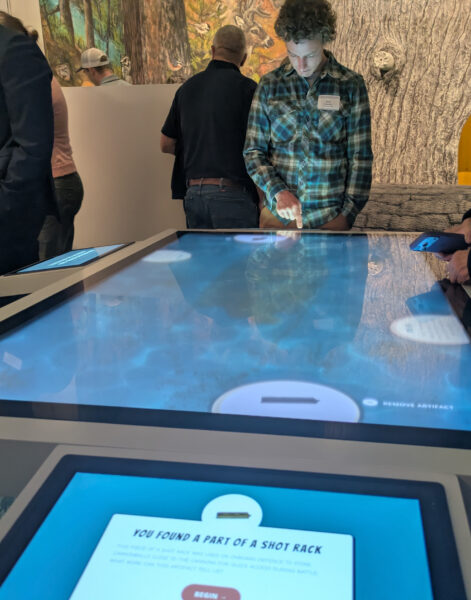
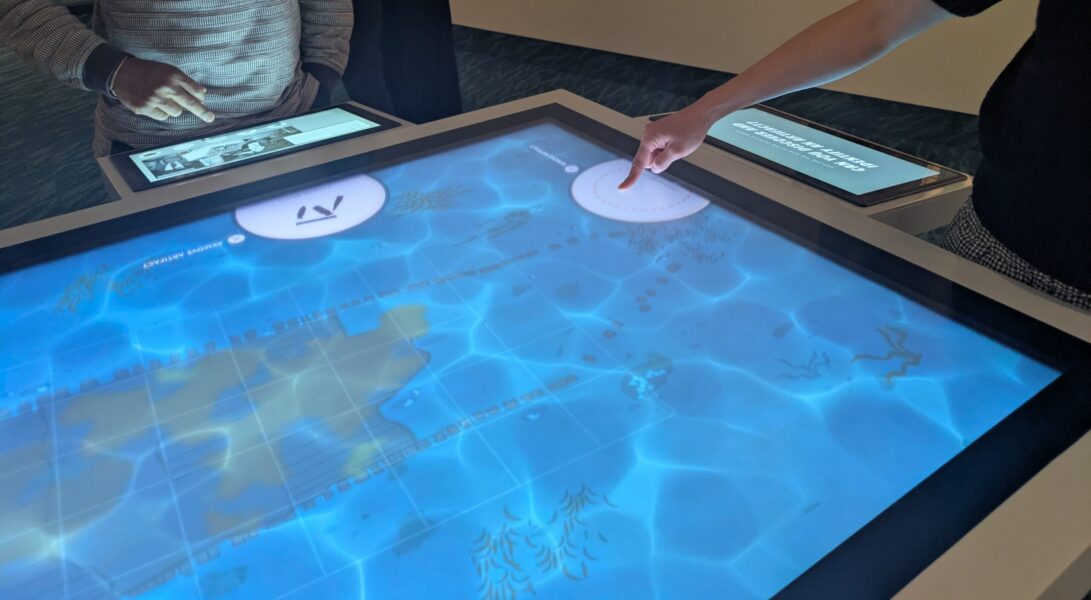
The game features a 65” touchscreen housed within a metal enclosure with four peripheral touchscreen stations. Visitors explore an animated underwater model of the Defence, finding artifacts by dragging their finger on the table to reveal the seabed beneath the surface and hovering over a glimmering object to grab it. When they “excavate” an object, it is covered in mud and often unrecognizable. Pulling that artifact into a nearby examination station prompts visitors to determine its identity by solving a quick puzzle, using cleaning tools, or mending it back together.

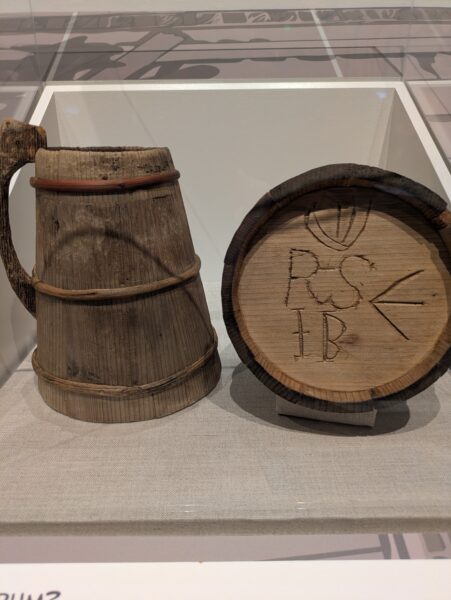
Each step of the discovery process is accompanied by brief moments of interpretive content, so visitors learn about life aboard the Defence and the science of archaeology as they play. Many of the restored artifacts featured within the game are mounted in vitrines around the exhibit, giving visitors the opportunity to inspect these objects in person as well.