Case Study

First Amendment Museum

Summary
Designed, developed, and produced five self-contained, interactive exhibits exploring the freedoms protected by the First Amendment
Client
First Amendment Museum
Location
Augusta, Maine
Videography
Allen Baldwin, Derek Kimball

The First Amendment Museum invites visitors to explore the five freedoms guaranteed by the First Amendment to the U.S. Constitution. Located in Augusta, Maine, the museum encourages conversation, reflection, and civic engagement through exhibits focused on the freedoms of religion, speech, press, assembly, and petition.

In 2024, the museum was preparing to embark on a large-scale renovation of its historic building. Plans for the permanent galleries were still taking shape and they wanted flexible exhibits that could bridge the gap between the current space and the future one. They tasked us with creating five self-contained interactive stations: one for each of the First Amendment’s protected freedoms.

Perch led the project from concept through installation, developing exhibit designs and collaborating closely with museum staff to create and refine interpretive content. From interactive experiences and AV systems to fabrication and installation, Perch managed the full production process through a combination of in-house work and coordination with specialty contractors.
Concept Design

These self-contained exhibits were not designed to be comprehensive overviews of each freedom outlined in the First Amendment, but rather to act as conversation starters and a way to spark interest in how the First Amendment affects our daily lives.

Each exhibit was designed to contain plenty of content in a small space—using interactive digital media and multi-sided, sculptural forms—while also feeling approachable.  It was a requirement that the components could be disassembled and transported to other locations as temporary popup exhibits. Initial conceptual renderings helped us dial in the designs and test them against our exhibit framework and constraints.

IMG_8469

Freedom of Speech

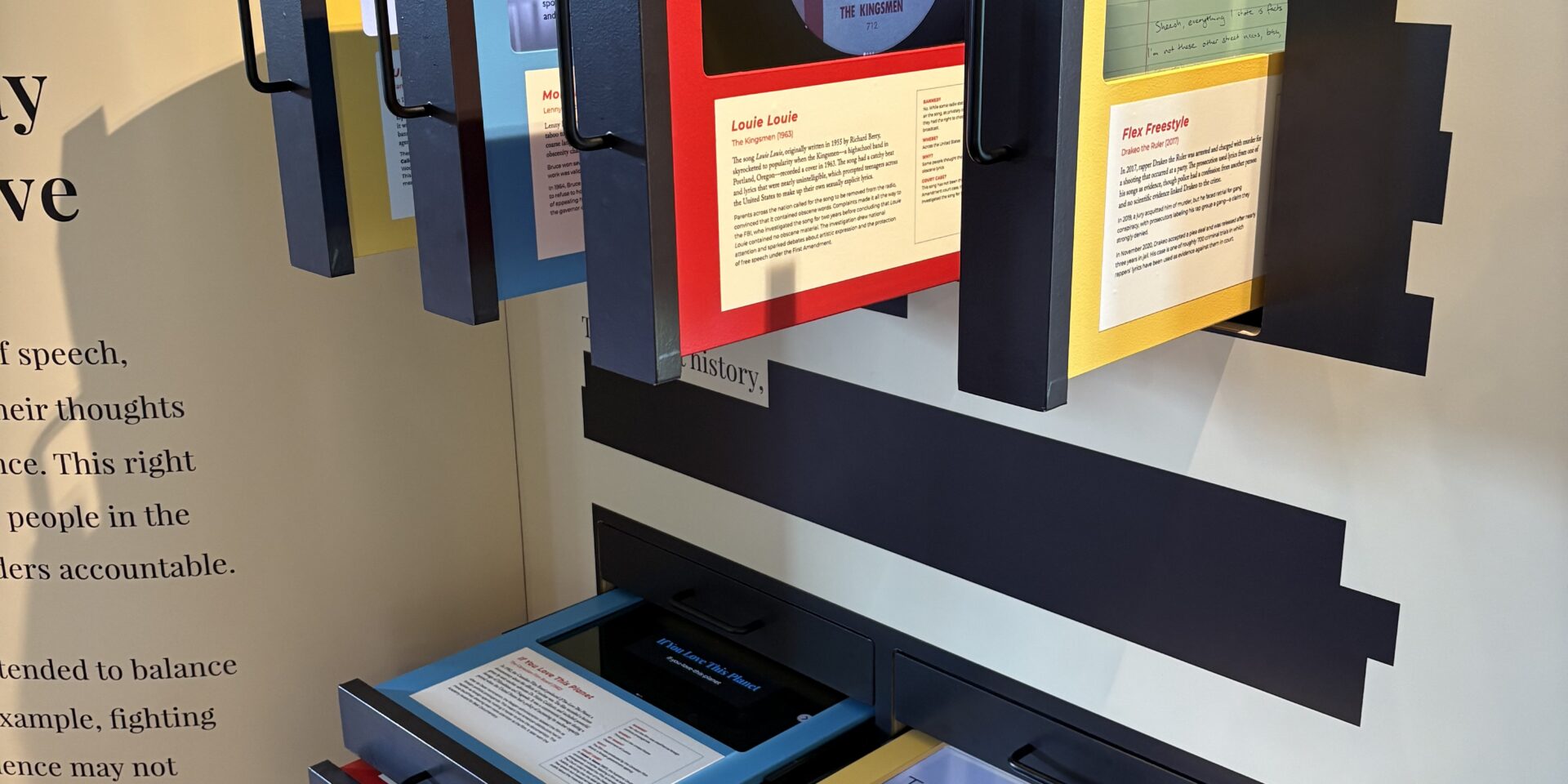
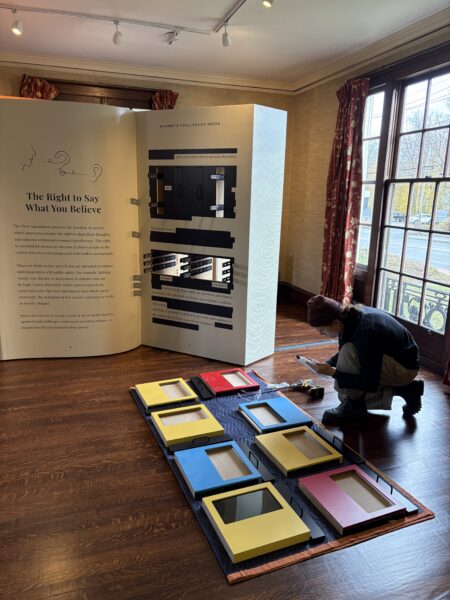
The Freedom of Speech exhibit began with a question: how can we explore this wildly complex constitutional right in a way that feels accessible to visitors? The answer we landed on was “through the lens of art.” We were curious about the moments in U.S. history that have helped define what kinds of speech are—and are not—protected by law.

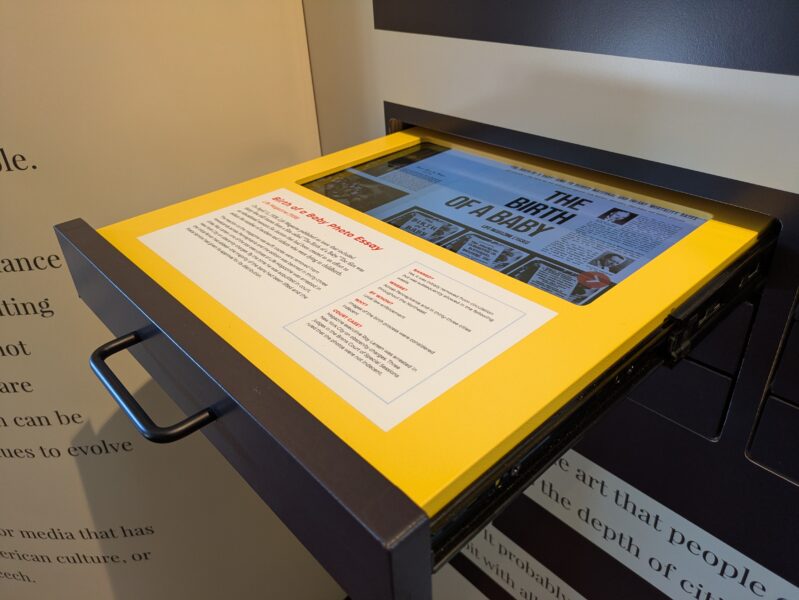
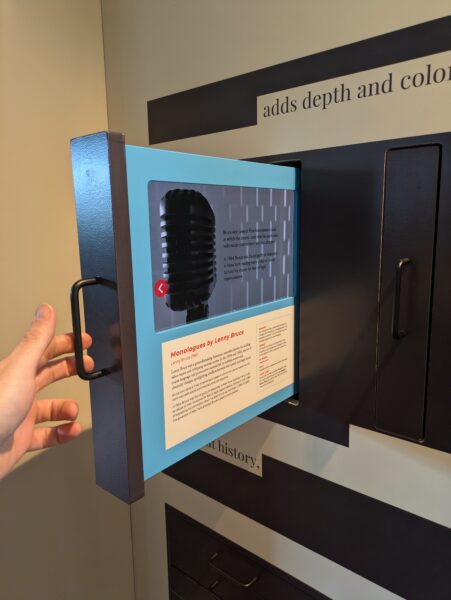
To do this, we selected ten works of art—from music and literature to visual art and documentary film—that were so controversial that they led to court cases. These moments of collision between an individual’s creative expression and the legal system were critical in shaping the evolution of free speech as Americans experience it today.

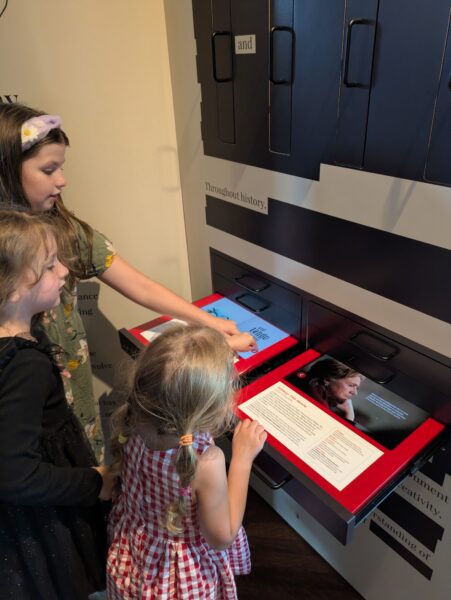
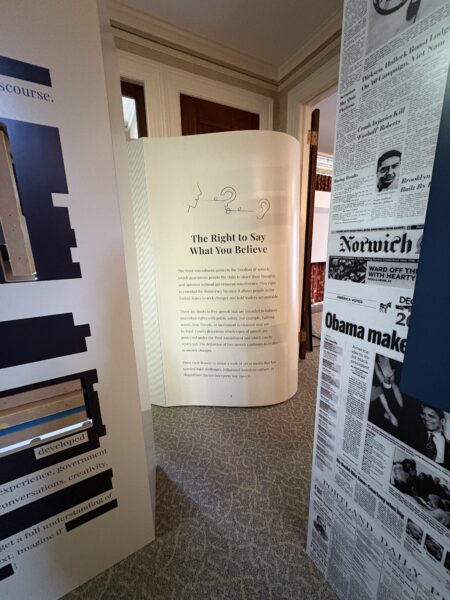
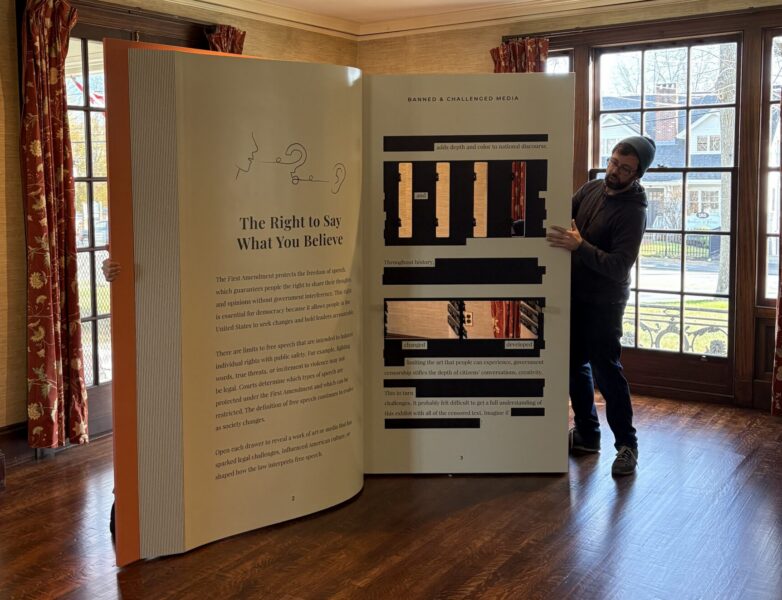
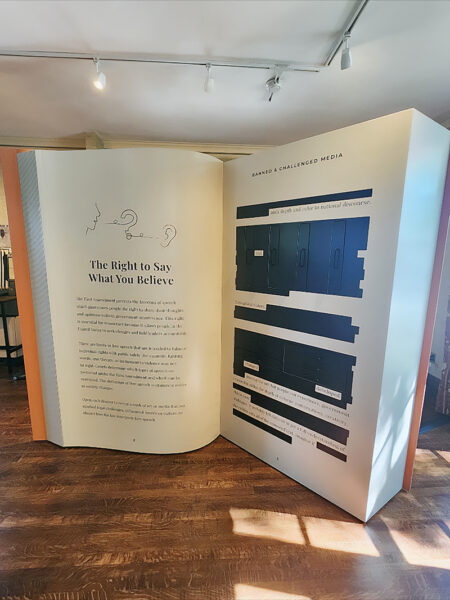
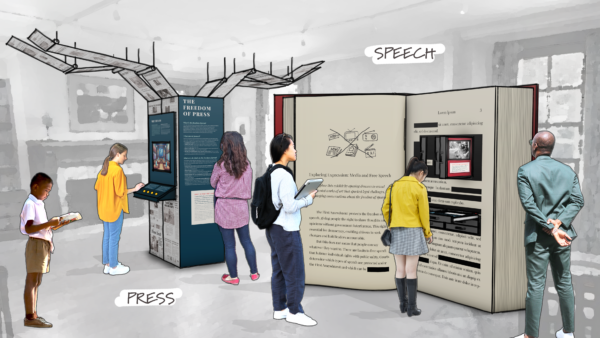
We wanted to bring the freedom of speech to life in an interactive way. The result was a large, colorful book-shaped exhibit featuring pull-out drawers that reveal a work of art paired with an interactive tablet. In collaboration with Allen Baldwin and Derek Kimball, we developed media content that guides visitors through the story behind each piece, the legal challenges it sparked, and the lasting impact of the cases that followed.

PXL_20260611_195738345
PXL_20260624_205112100
PXL_20260611_195802969
IMG_6295
IMG_6271
IMG_6291
fam1 copy
IMG_8475

Freedom of Petition

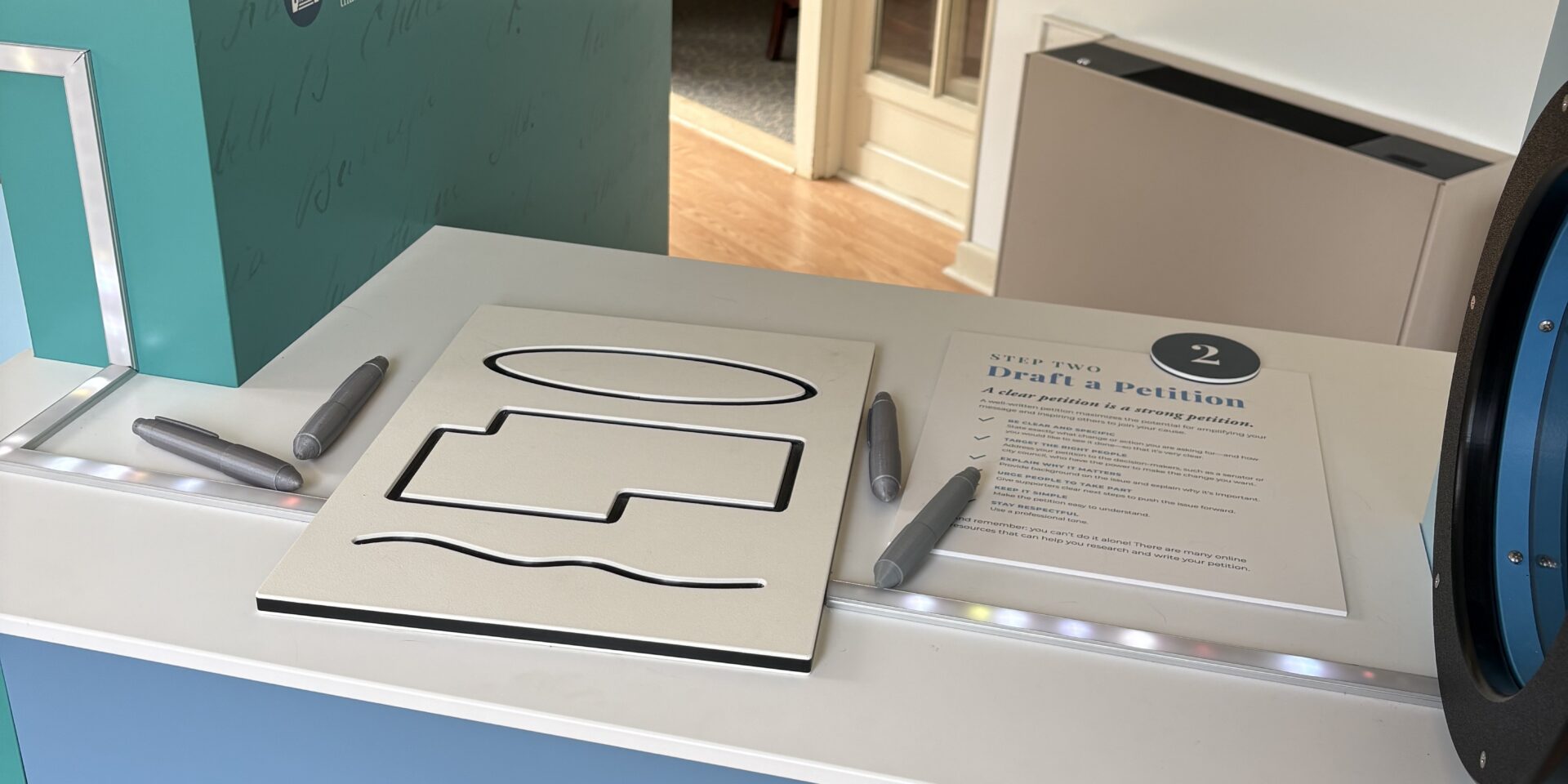
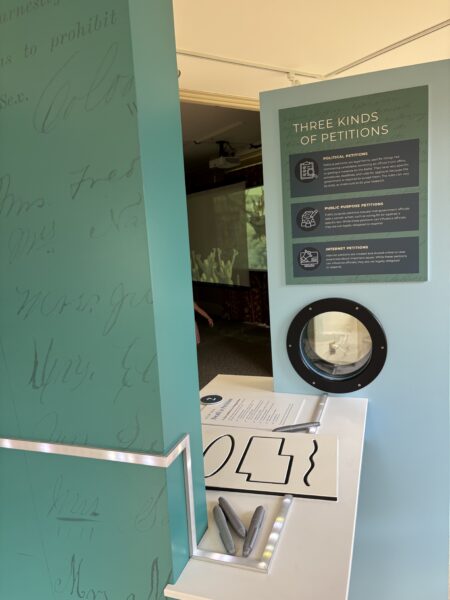
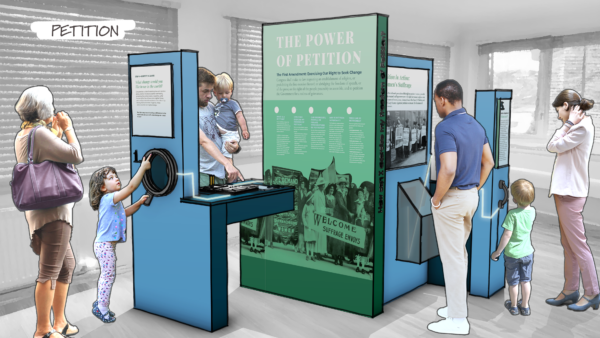
Our goal with the Freedom of Petition exhibit was to focus on translating this often-misunderstood right into an engaging, hands-on learning experience. We wanted to make the process of petition tangible and showcase how this right has been a tool for Americans to advocate for change.

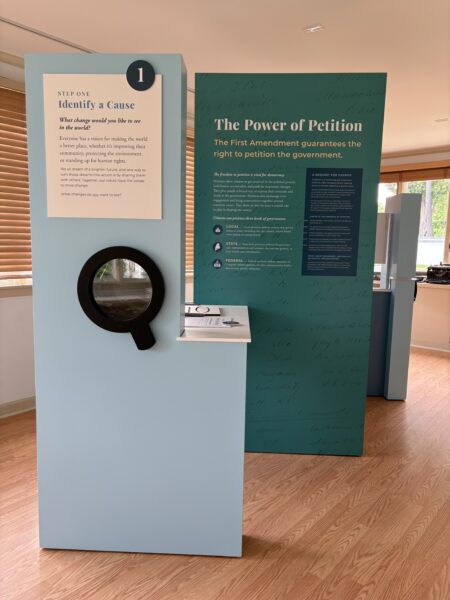
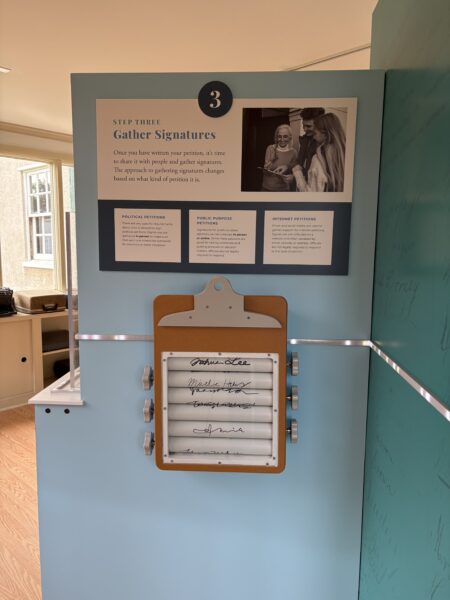
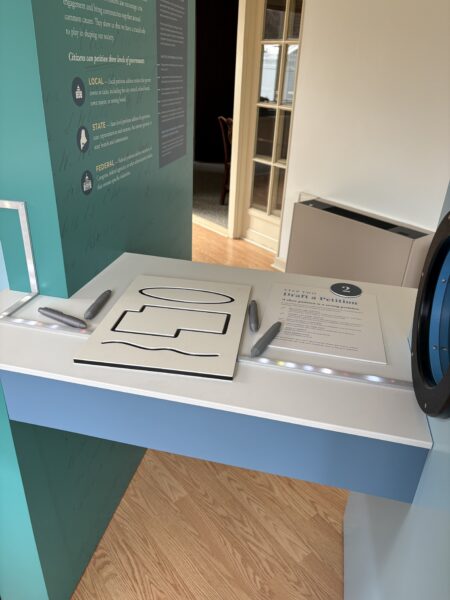
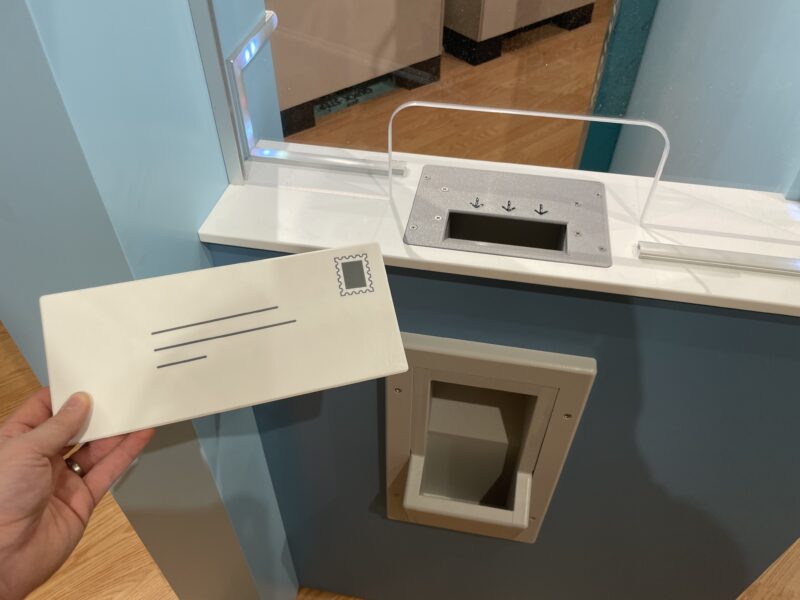
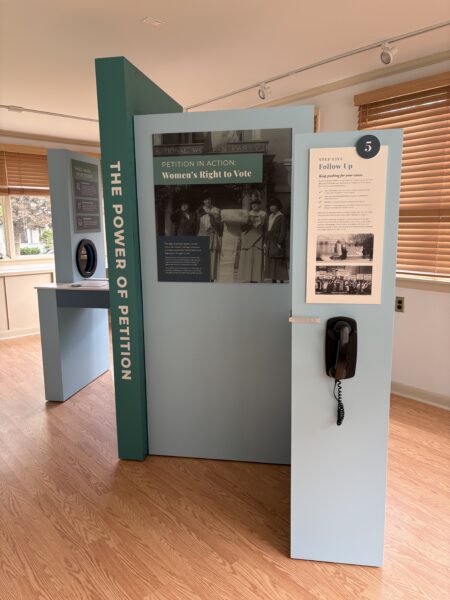
We took these ideas and built them into the Petition Machine: a sculptural interactive station that guides visitors through the petition process from start to finish in a playful and memorable way.

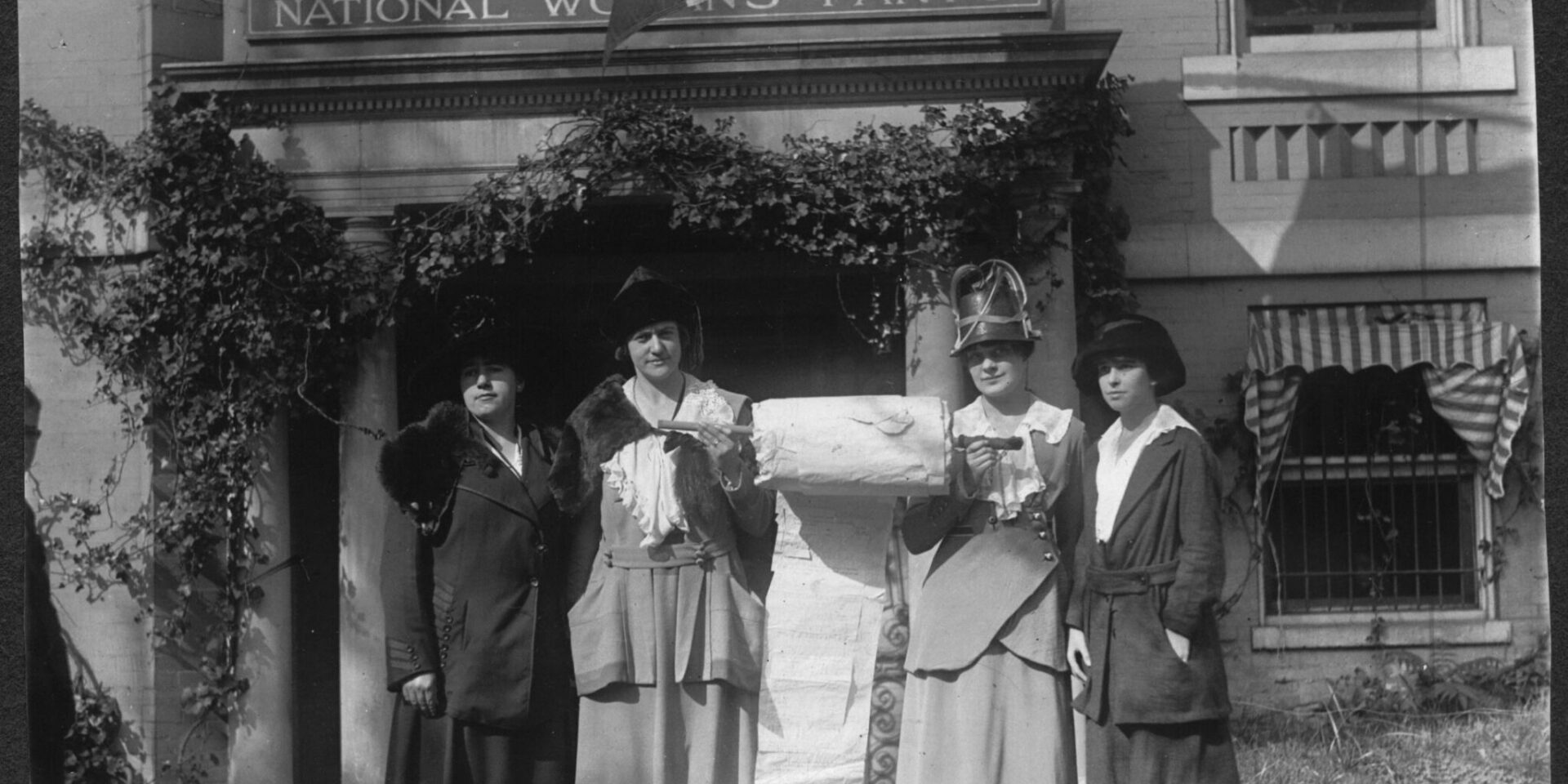
As visitors move around the exhibit, they follow the journey of an idea: from identifying a desired change to gathering support and submitting a petition. Along the way, they explore the history and impact of petition as a tool for civic engagement through the lens of the women’s suffrage. By highlighting real-life examples of how everyday citizens came together to create meaningful change, the exhibit aims to inspire visitors to find their own ways to take action on the causes they care about.

IMG_8474
IMG_8476
IMG_8475
IMG_8491
IMG_8473
PXL_20260731_184223253

Freedom of Press

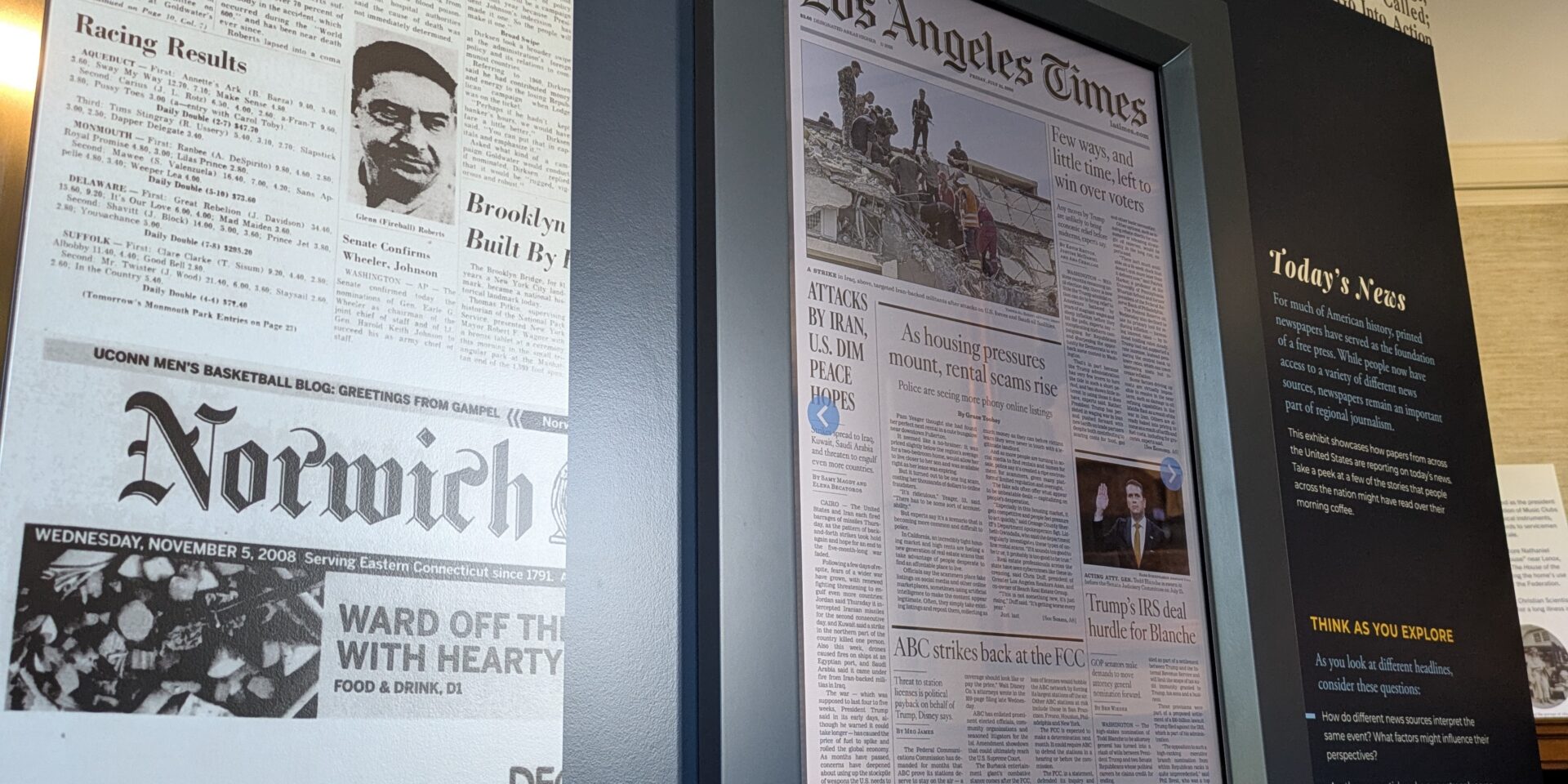
The Freedom of Press exhibit explores two facets of this freedom: the role of a free press in a democratic society and the importance of understanding how information is created, shared, and evaluated. We wanted visitors to understand not only what rights it protects, but also what is at stake when journalists are unable to report freely.

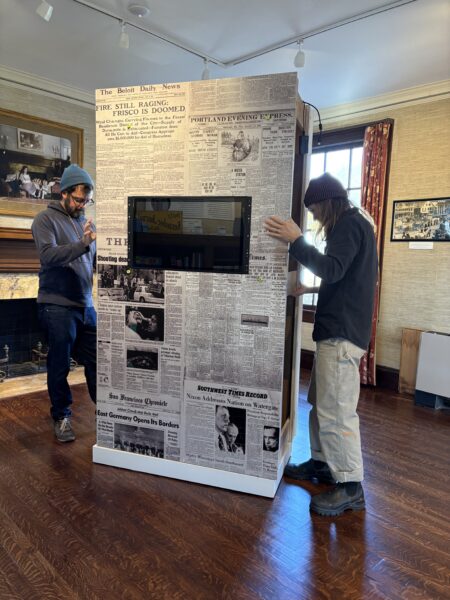
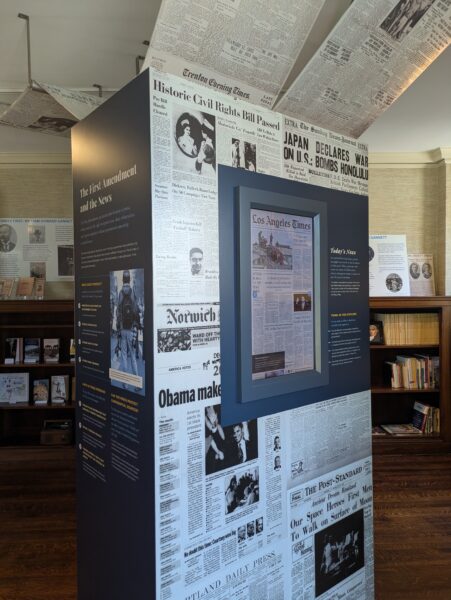
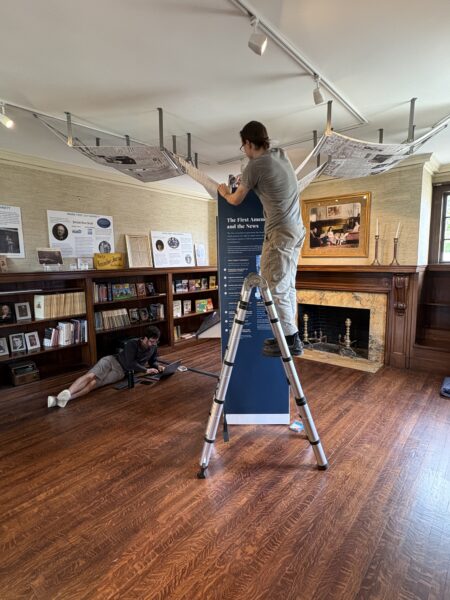
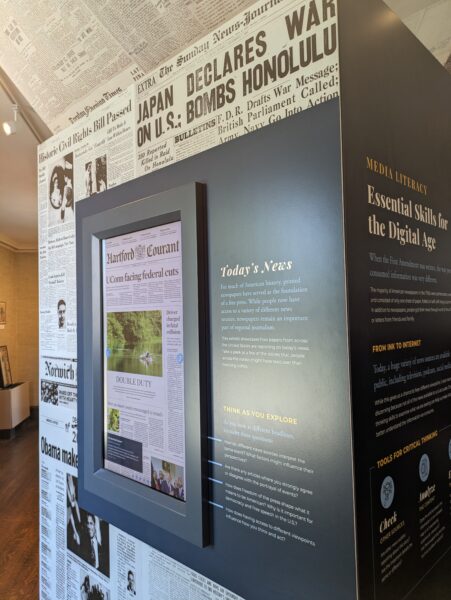
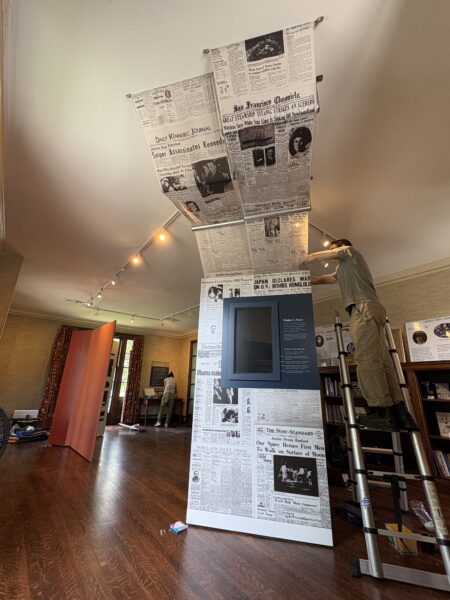
We designed this station as a freestanding exhibit inspired by the traditional newspaper printing press. A news sheet extends sculpturally overhead, creating a strong visual connection to the history of printed news while forming a unique architectural feature within the space.

IMG_6287
PXL_20260731_184231299
The station’s open design invites multiple visitors to engage simultaneously.
IMG_8457
PXL_20260731_184239361
IMG_8463

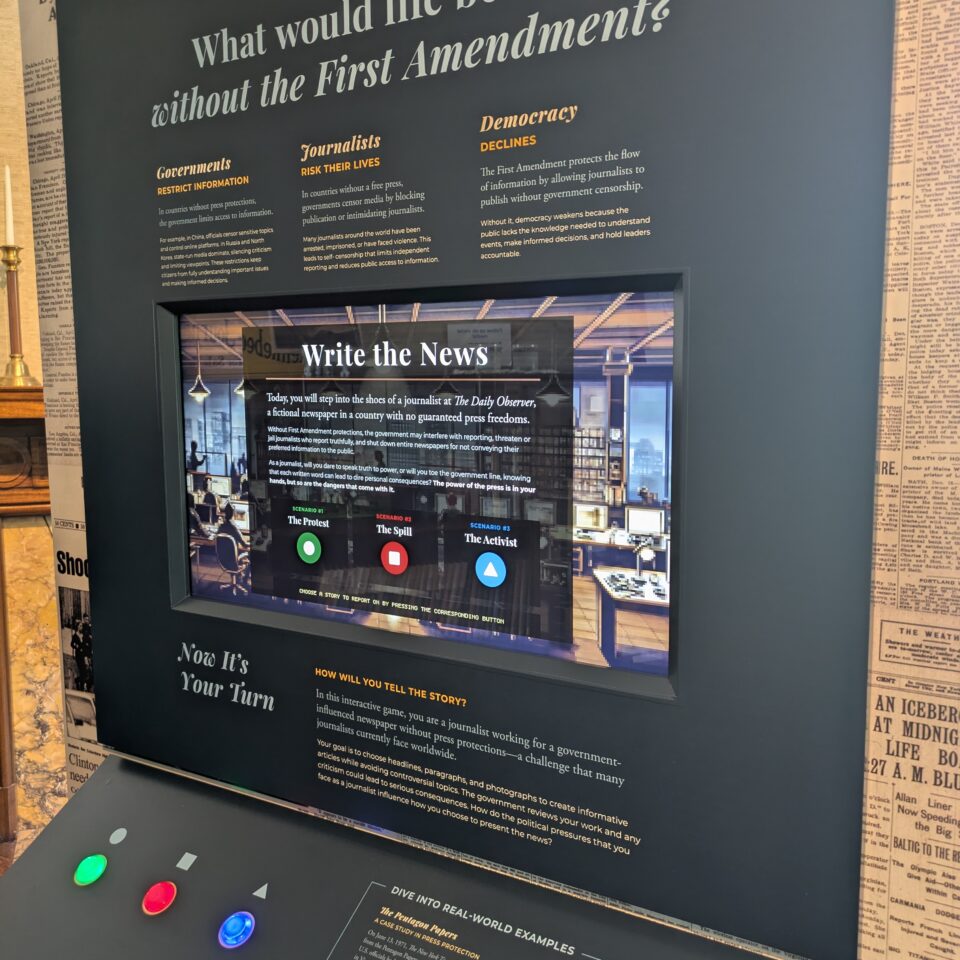
At the center of the Press experience is an interactive Write the News game that places visitors in the role of a journalist working in a country without press freedoms. Faced with a series of fictional events to report on, visitors make choices about how to portray the story. By selecting headlines, images, and captions, they determine whether their article represents events in an unbiased way or is shaped by fear of government censorship. Once their news piece is finished, visitors face the consequences of their work: will their article make it past the government censor or will they face retribution from authorities?

Other exhibit elements focus on the rights that are protected by the freedom of press, an exploration of media literacy, and the evolution of this right with the introduction of new forms of technology.

PXL_20260731_184115870

Freedom of Assembly

For this exhibit, we wanted visitors to feel like they were a part of an assembled crowd. An introductory panel provides visitors with context about this freedom as they approach a darkened space. Several layers of theatrical scrim hang from the ceiling, upon which short-throw projectors display a unique layered media experience with visual depth.

Allen Baldwin led the videography work, sourcing eye-level videos of historic protest movements and crafting a powerful video experience about the role of peaceful assembly in creating change. The resulting exhibit is an immersive dive into the history and importance of this freedom.

IMG_6255
A special thanks to Remy, the on-staff First Amendment cat, who was a big help and is a very good boy.