Case Study

Maine Maritime Museum

Summary
Exhibit graphics, projection mapping, interpretive storytelling, and hands-on interactives that bring the people, craft, and legacy of a historic Maine shipyard to life
Client
Maine Maritime Museum
Location
Bath, Maine
Exhibit Coordination
Chris Sullivan Creative Consulting

The Maine Maritime Museum preserves and shares the stories of the people, industries, and innovations that have shaped Maine’s maritime heritage and enduring connection to the sea.

Located on the grounds of the former Percy & Small Shipyard in Bath, the museum preserves the site where the world’s largest wooden ship, the Wyoming, was constructed. From its place along the banks of the Kennebec River,  just down the road from Bath Iron Works, the campus connects Maine’s shipbuilding past with its ongoing maritime legacy. In 2026, it was named the #1 maritime museum in the country by USA Today.

Perch partnered with Maine Maritime Museum and Chris Sullivan Creative Consulting to reimagine several permanent exhibit spaces. The goal was to introduce visitors to the inner workings of the Percy & Small shipyard,  share the tale of its most historic creation, and engage visitors  with hands-on learning.

Working closely with museum staff, we developed interactives, graphics, and interpretive panels that explore the people, tools, and craftsmanship behind these remarkable ships.
IMG_3731

Sewall Hall

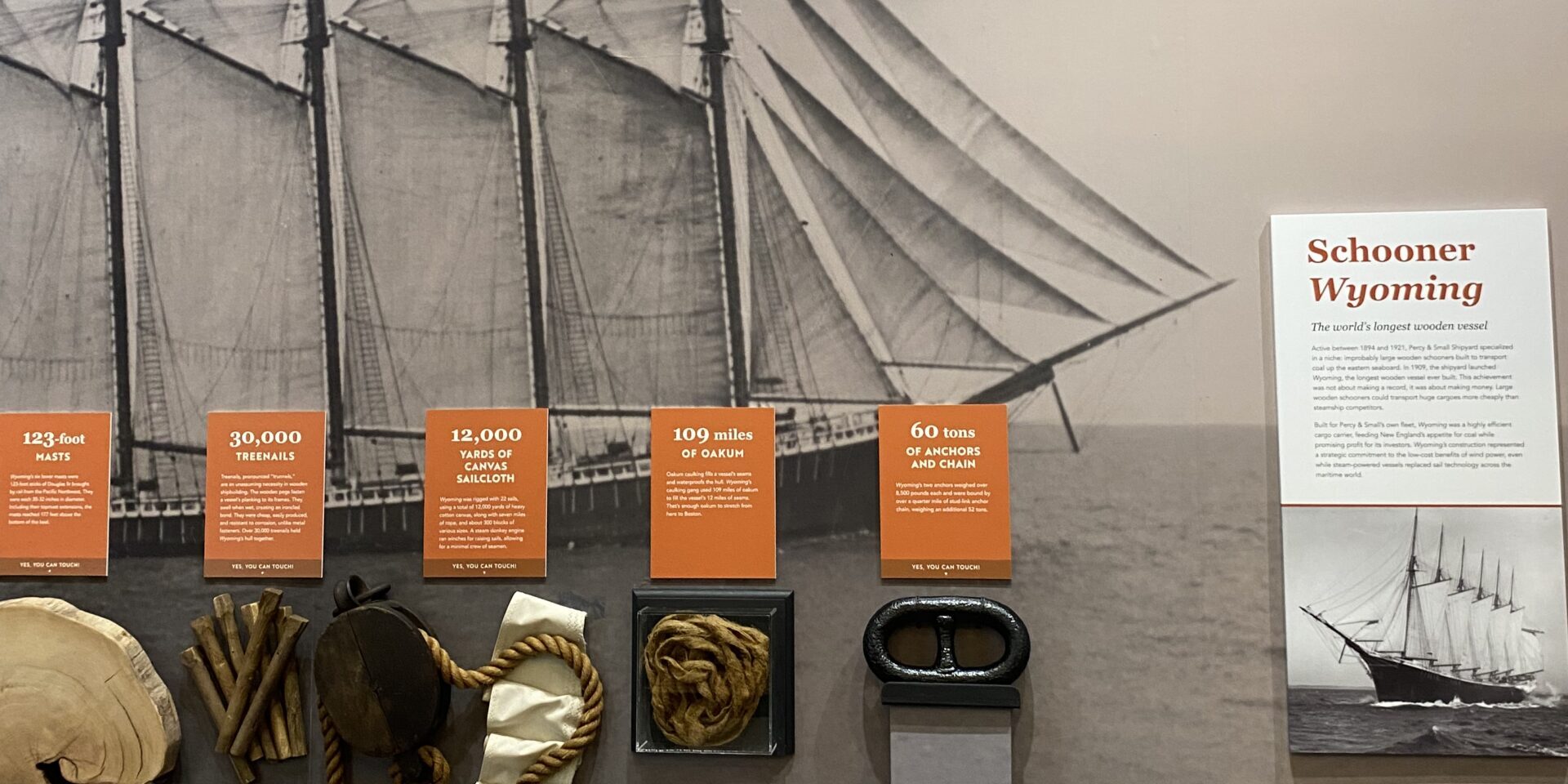
This gallery wall is one of the first things that visitors see when they walk through the front doors of the museum. We wanted to greet them with an exhibit that would immediately draw attention, pique curiosity, and give people a sense of what this space was about: the rise and fall of the Wyoming, the largest wooden schooner ever built.


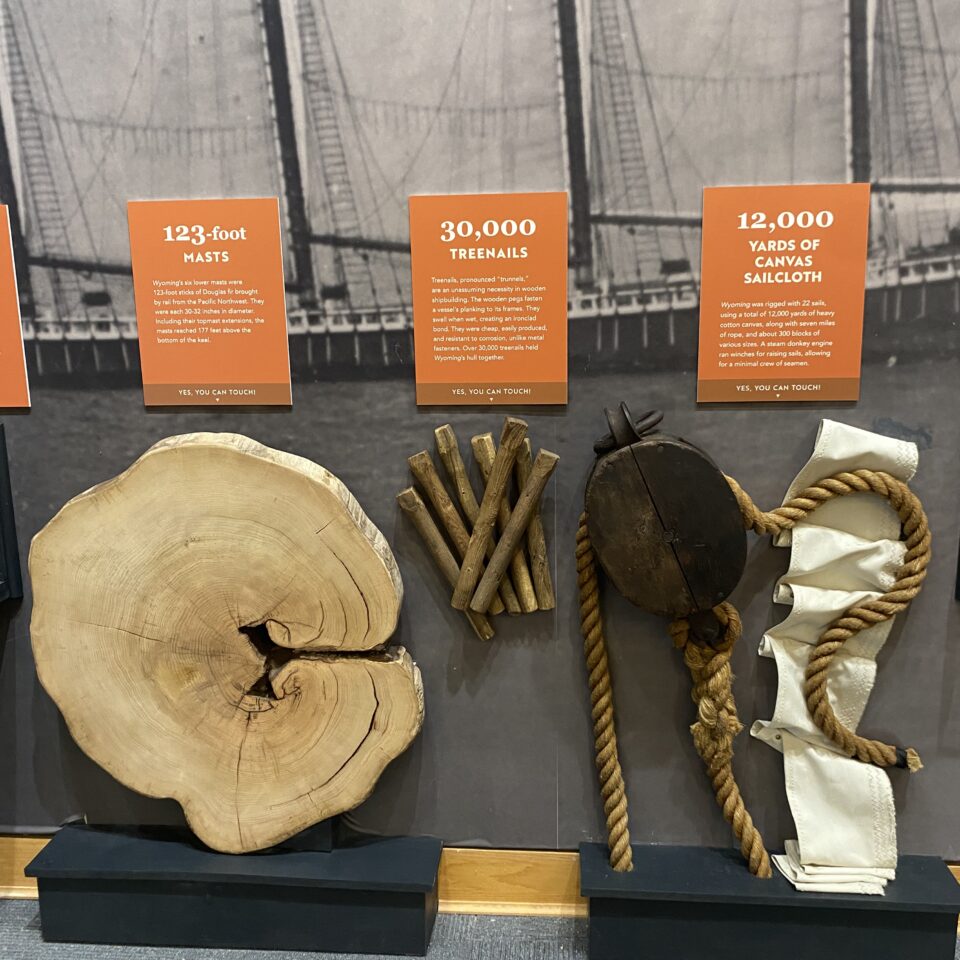
To give a sense of the Wyoming‘s tremendous size, we opted to fill an entire wall with a huge historic photograph of the ship. Along the length of the image are mounted touchable pieces of materials used to build the ship, giving visitors a feel for how many resources went into constructing this massive vessel.

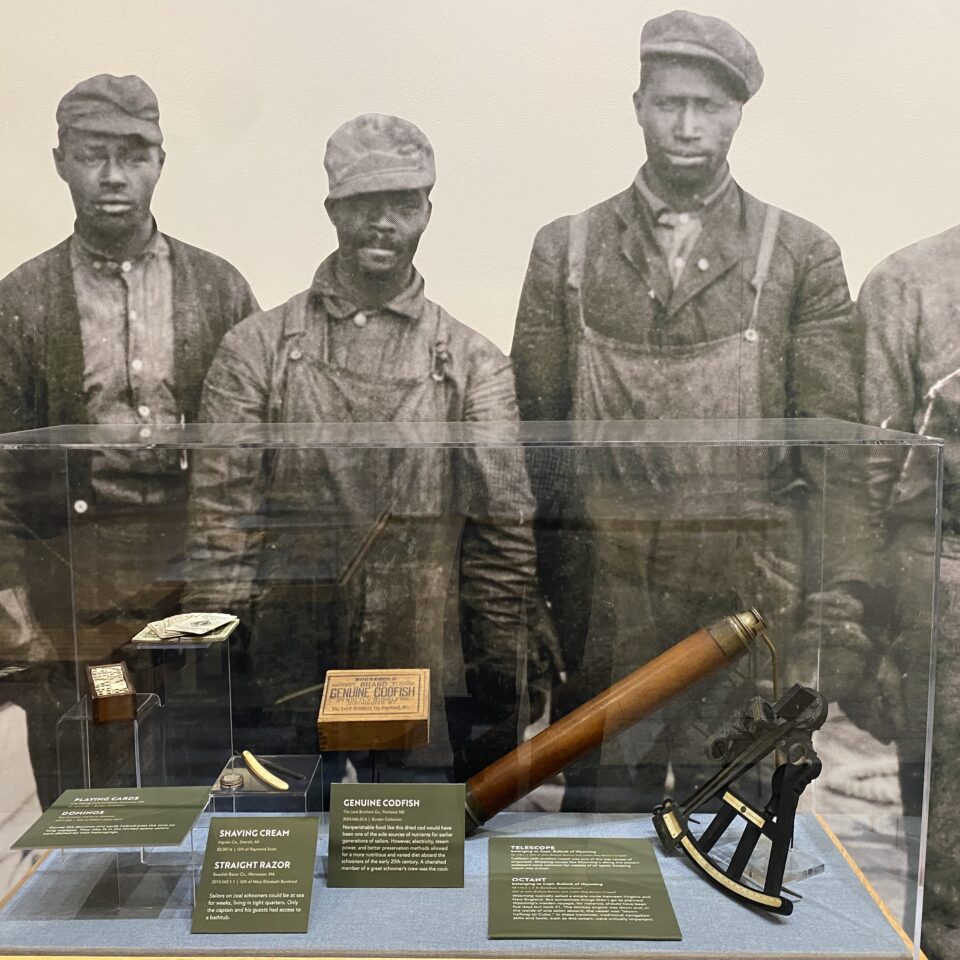
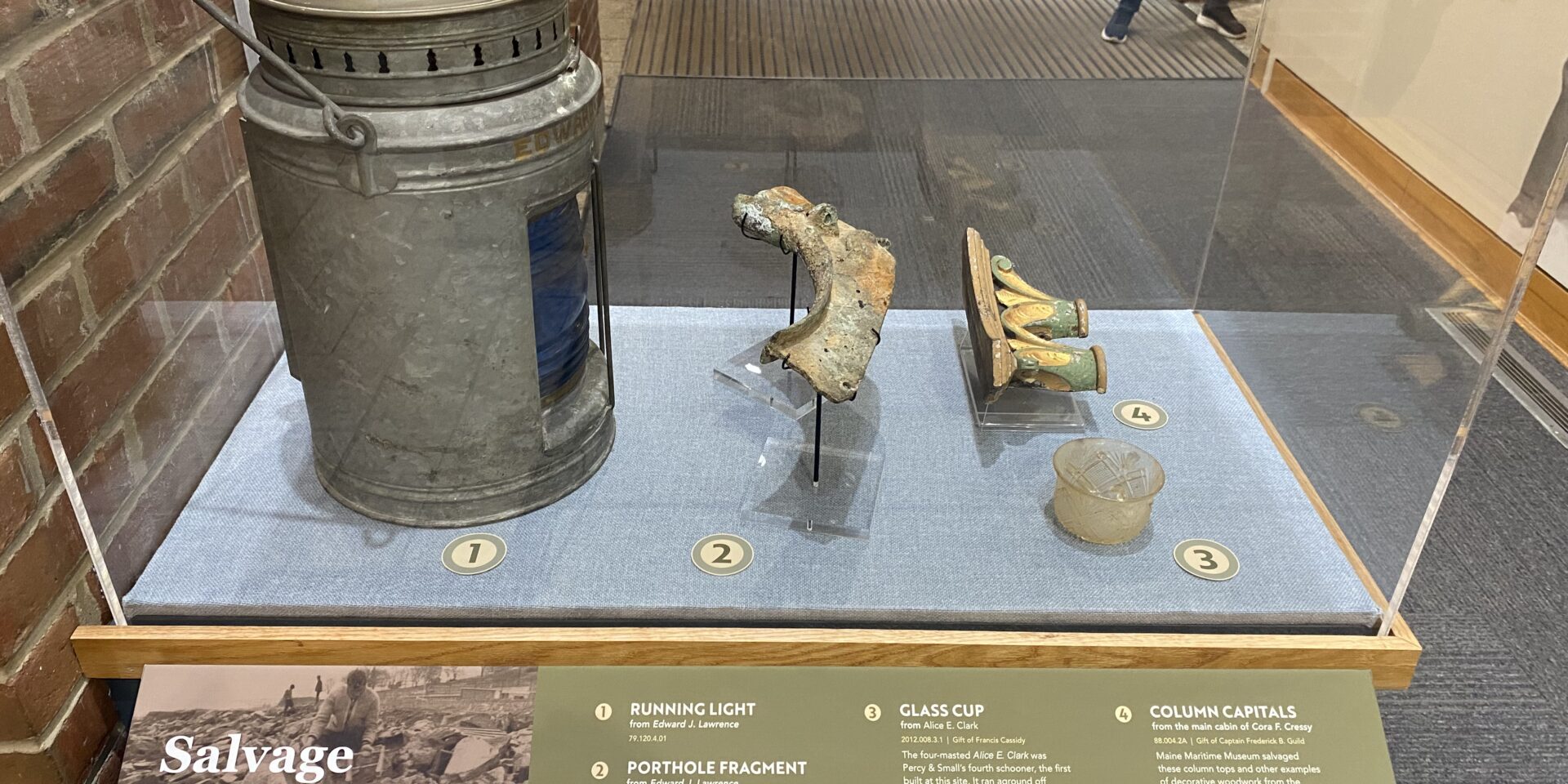
As visitors continue through the gallery, they learn about the tragic sinking of the Wyoming. Images of its crew, stories of life aboard, and artifacts recovered from the wreck paint a vivid picture of the risks of sailing these vessels and the crews that were willing to take them.

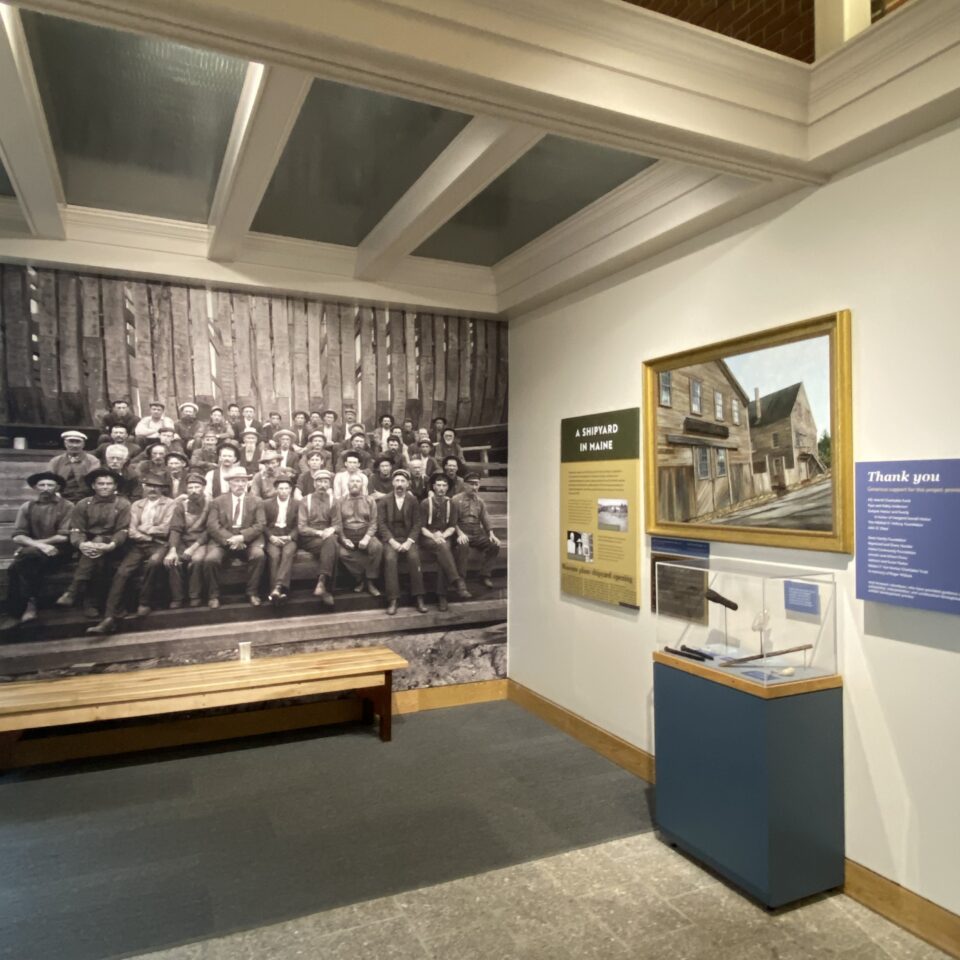
Moving forward through time towards the present day, visitors can explore the end of Percy & Small and the wooden ship era. This gallery ends at a window with a view down the Kennebec River to neighboring Bath Iron Works, where the legacy of shipbuilding lives on.

IMG_3723
IMG_3765
IMG_3724

Reinterpreting the McEvoy Gallery

The museum’s goal was to reimagine this gallery as a deeper exploration of the inner workings of the Percy & Small’s shipyard. The hope was that this space could serve two functions depending on the season. In the winter, when many of the outbuildings were closed for the season, it would give visitors an understanding of what went on in those spaces. In the summer season, it would serve as an introduction to the shipyard to prepare visitors for what they would experience when they moved outdoors.

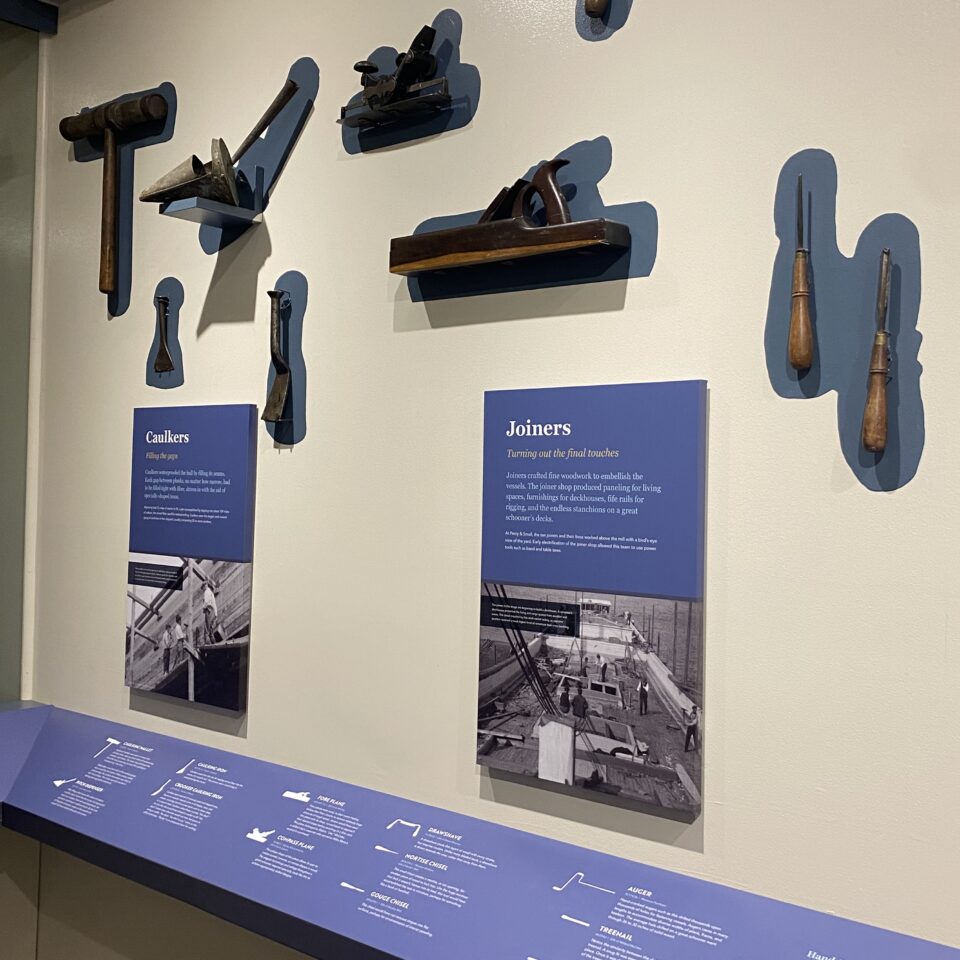
The new gallery allows visitors to explore each role involved in building a wooden schooner. It weaves together historic artifacts, personal stories, and images to create a hands-on experience of life at the shipyard. Together, these elements invite visitors to uncover the stories, skills, and traditions behind wooden shipbuilding and connect with a craft that has shaped Maine’s maritime heritage.

IMG_3738
IMG_3757

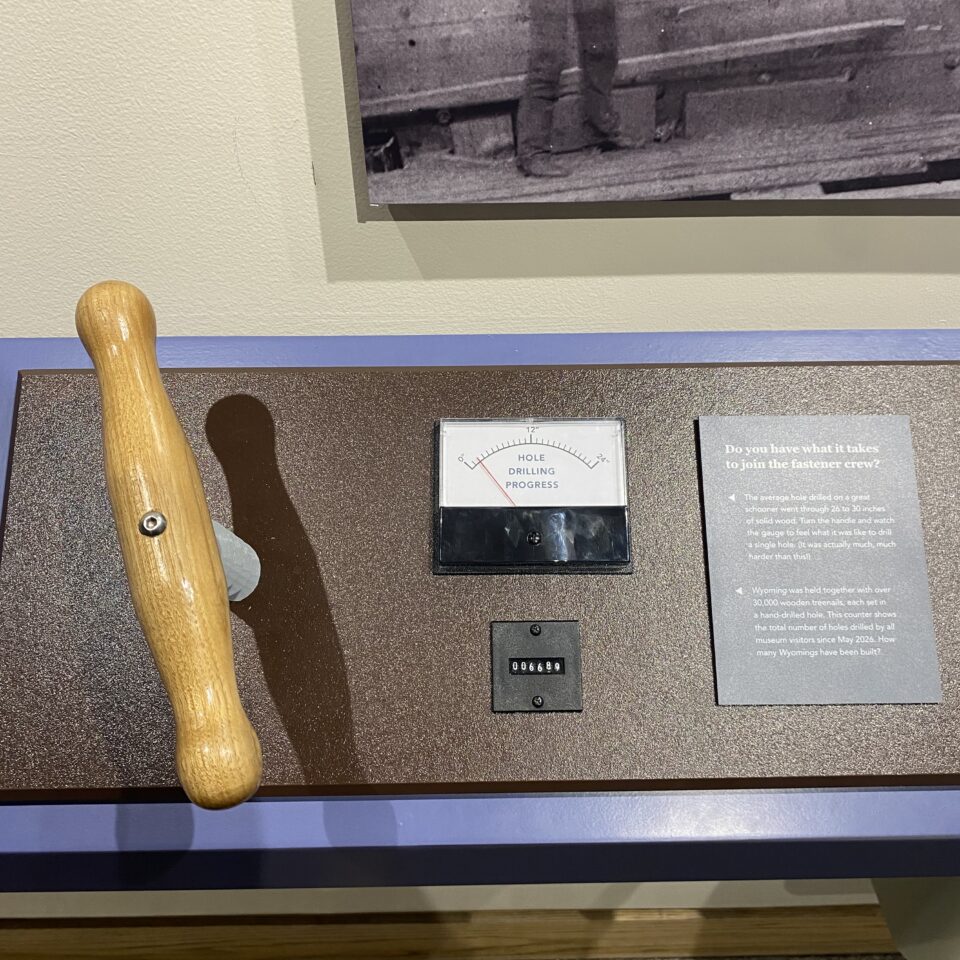
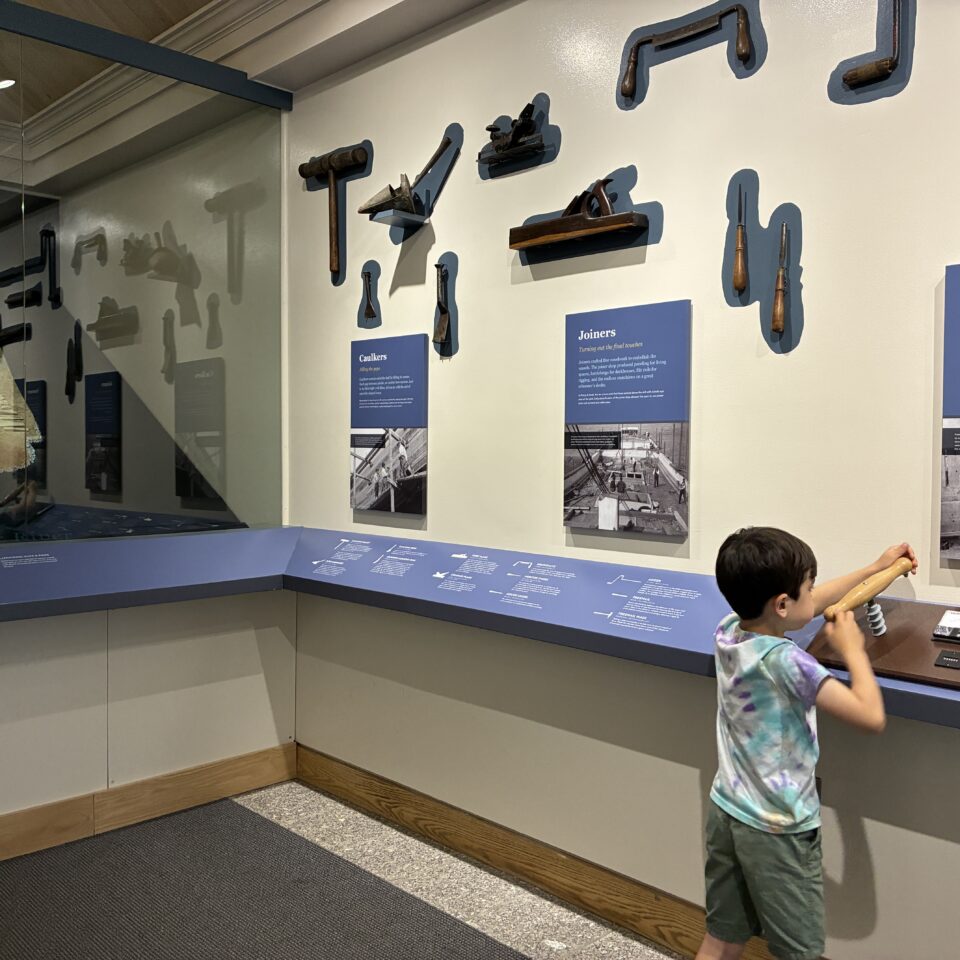
To help visitors appreciate the physical demands of traditional shipbuilding, we created a hands-on auger interactive. As visitors turn a hand-cranked replica, a counter tracks each rotation, revealing the effort, patience, and precision required to complete a single hole.

We wanted to highlight the skill and endurance behind one of shipbuilding’s most demanding trades: the fasteners, the craftspeople responsible for joining a vessel’s massive wooden timbers together.

IMG_3761
IMG_4128
Workers drilled thousands of holes through more than two feet of solid wood by hand. 

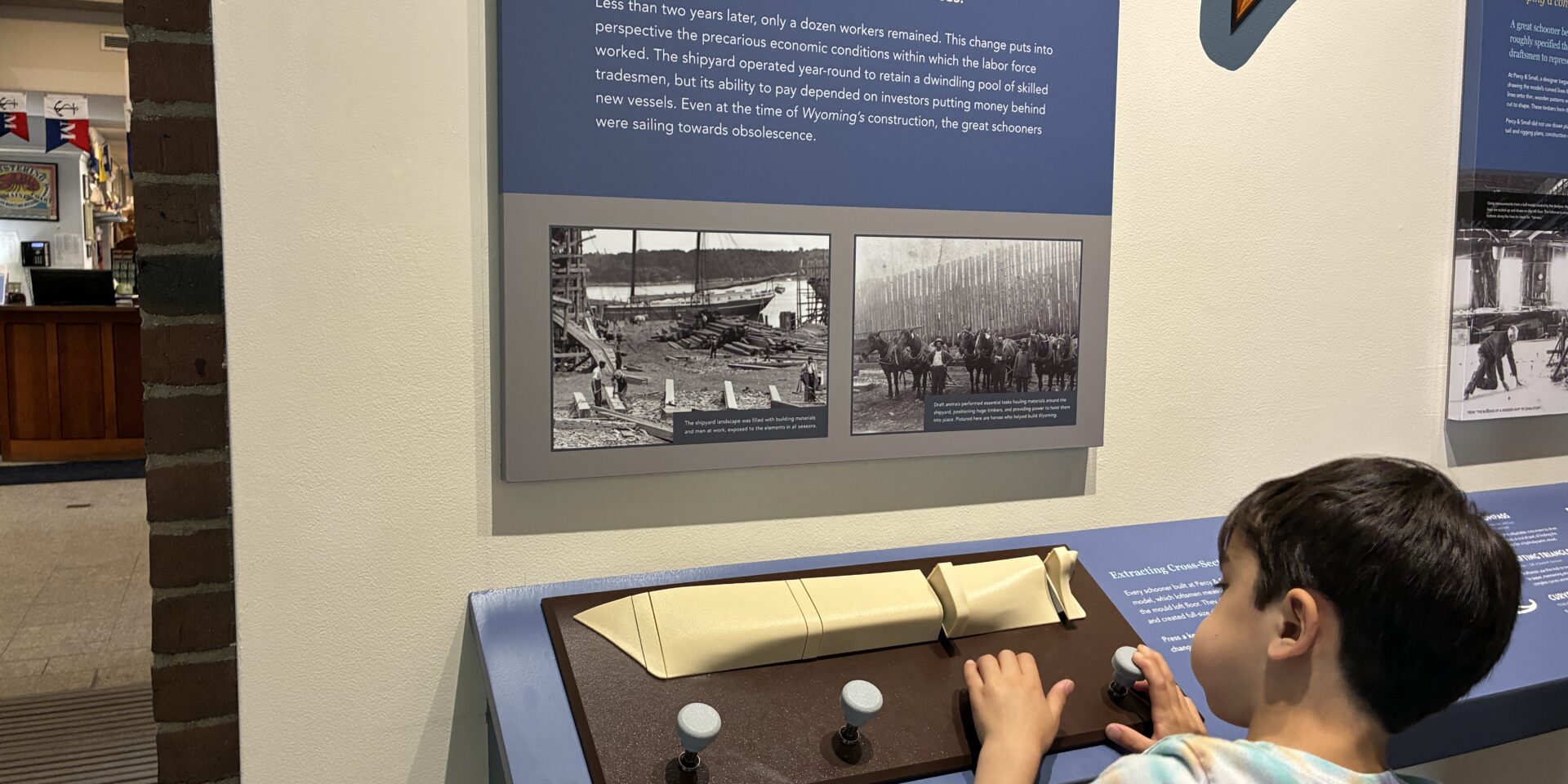
At Percy & Small, building a schooner began with a carved half-hull,  not a paper blueprint. Loftsmen translated the curves from the model onto the Mould Loft floor, scaling up the measurements to create the pattern pieces that shaped the massive timbers of the hull.

The drafting interactive lets visitors explore this process firsthand, using a replica half hull with levers that lift individual cross-sections from the model.

IMG_4135
The drafting interactive helps visualize how loftsmen translated complex 3D shapes into to the flat patterns used to construct the ship.

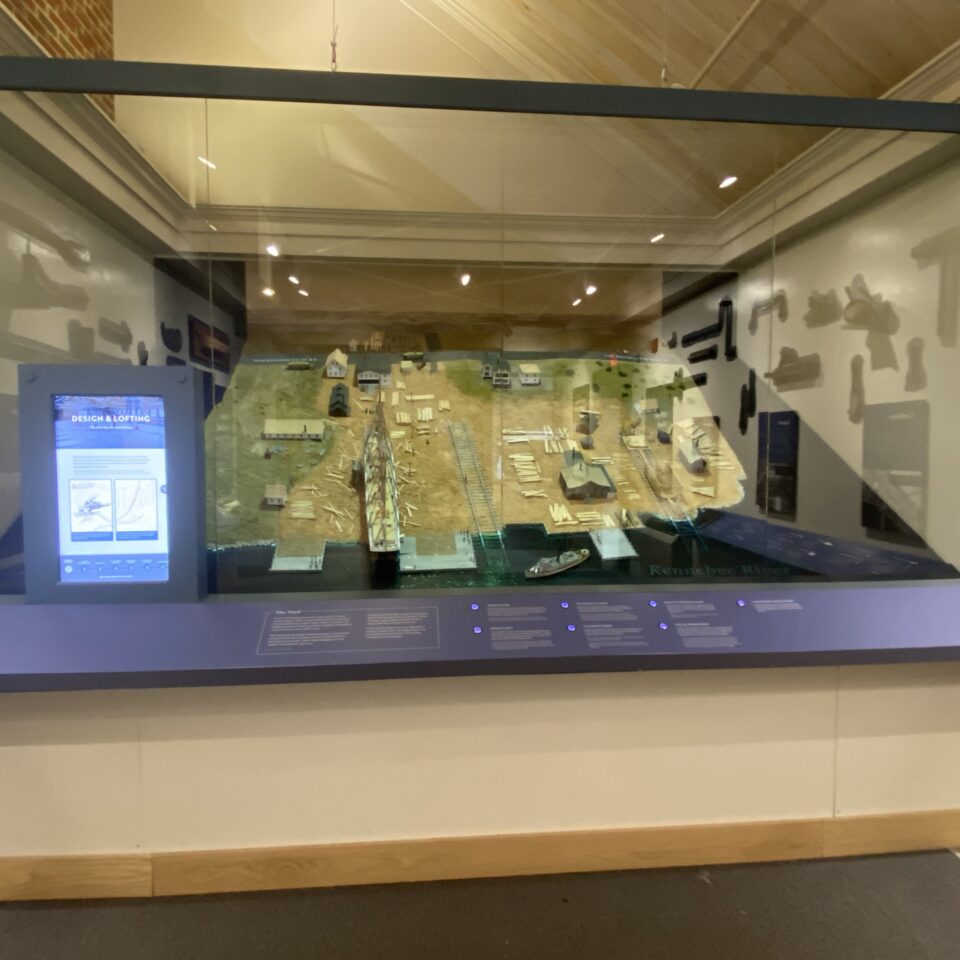
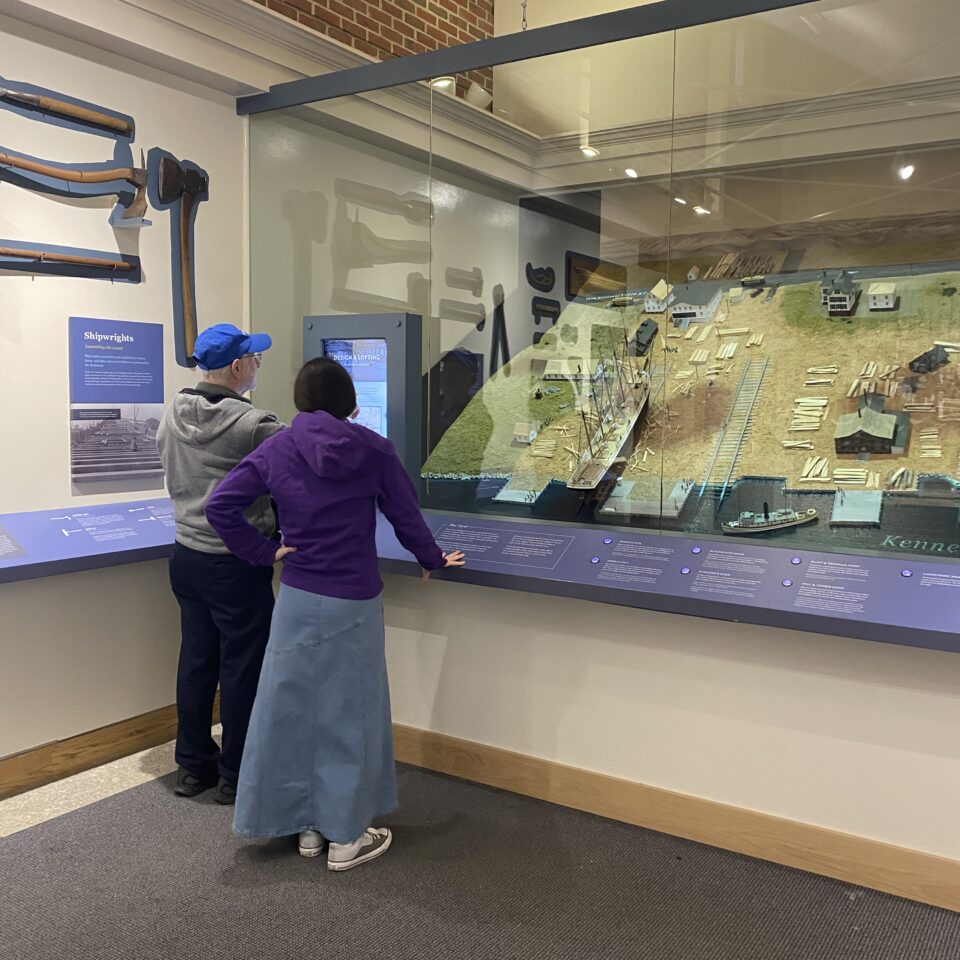
A wooden schooner was the result of countless skilled craftspeople working together across the Percy & Small shipyard. Each building supported a different team or stage of construction, from shaping timbers to preparing the many components that would become a finished vessel.

To illustrate how these spaces and people worked together, we took an existing model of the Percy & Small shipyard and used a short throw projector to add a layer of interactivity. Visitors learn about the building process, swiping through each step on the nearby kiosk while the relevant buildings are illuminated. A short animation shows what the ship would look like during each stage.

IMG_3749
Projected animations bring the model to life, illuminating active workspaces and revealing the interconnected nature of the shipyard.
IMG_3755

Sawmill

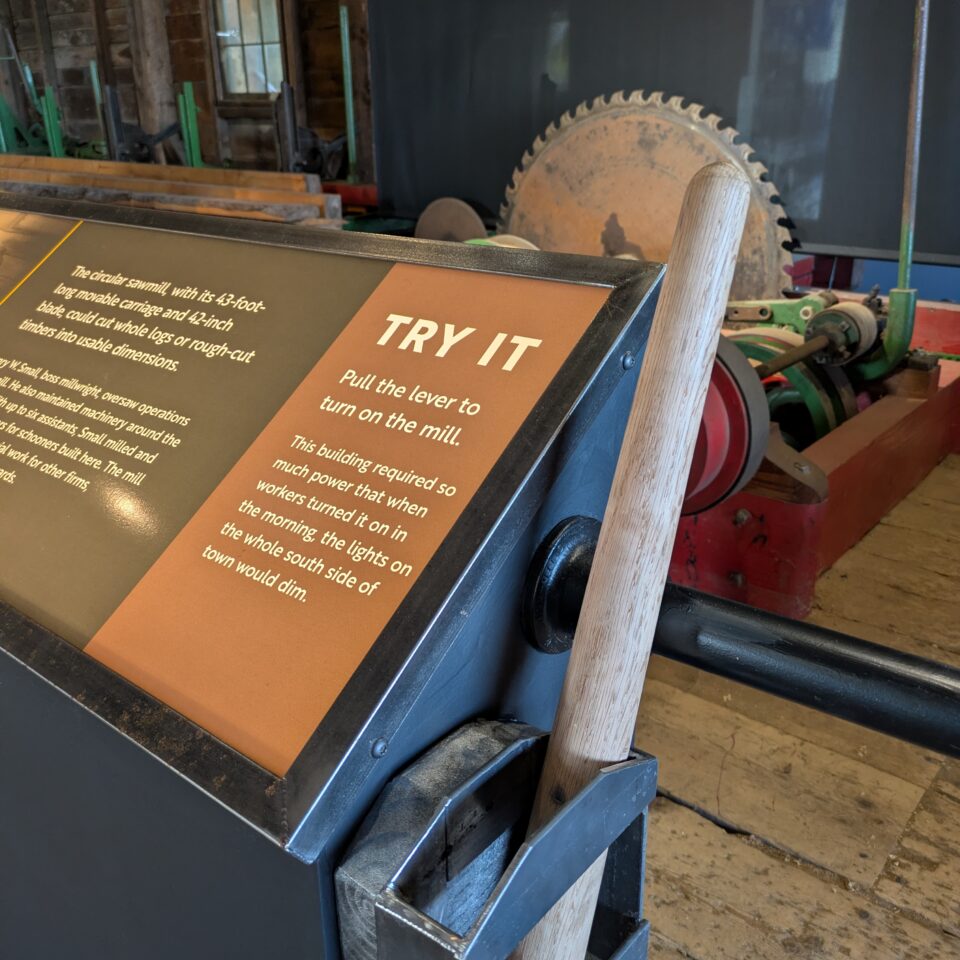
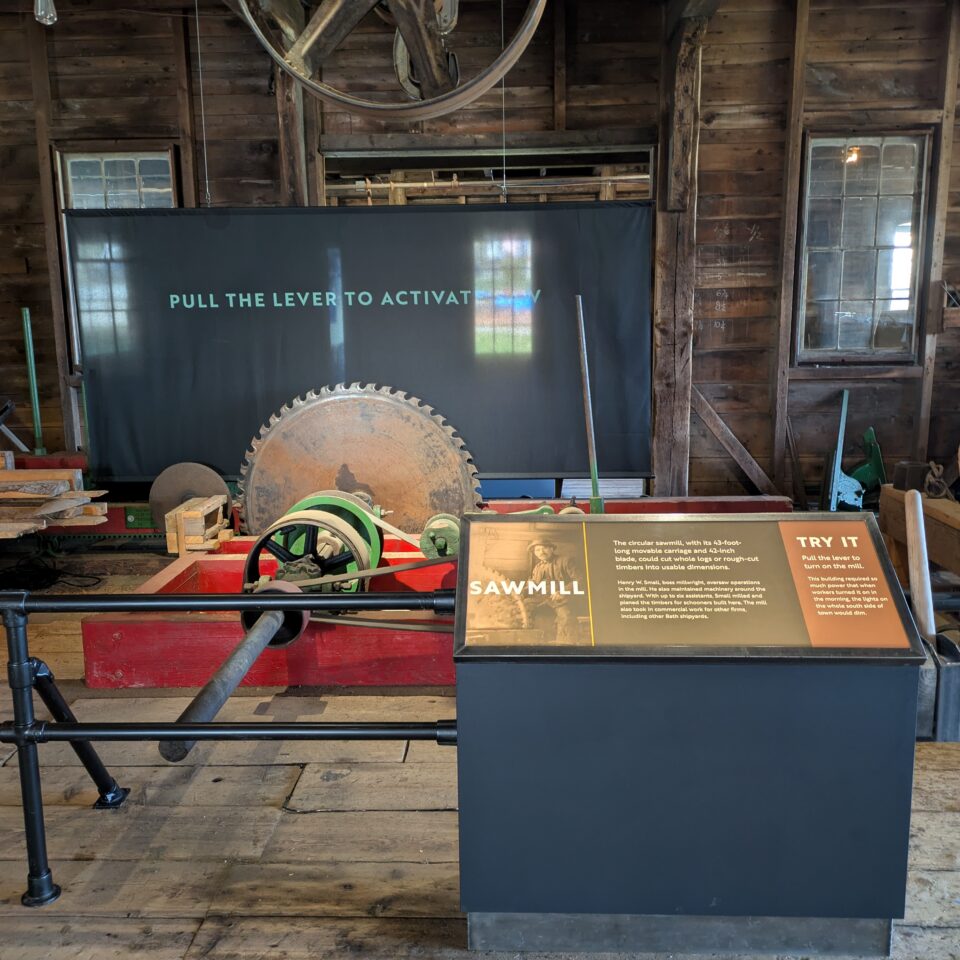
This historic building is where raw lumber was milled into the boards that were used to build the hull of the ship. The museum’s goal was for visitors to learn about the process in a hands-on way.

The bandsaw interactive shows what the raw logs would look like after being processed by the massive saw. When visitors pull a lever, a projector shows the logs passing out of the machine, accompanied by audio.

PXL_20261015_171350540
PXL_20261015_171314694

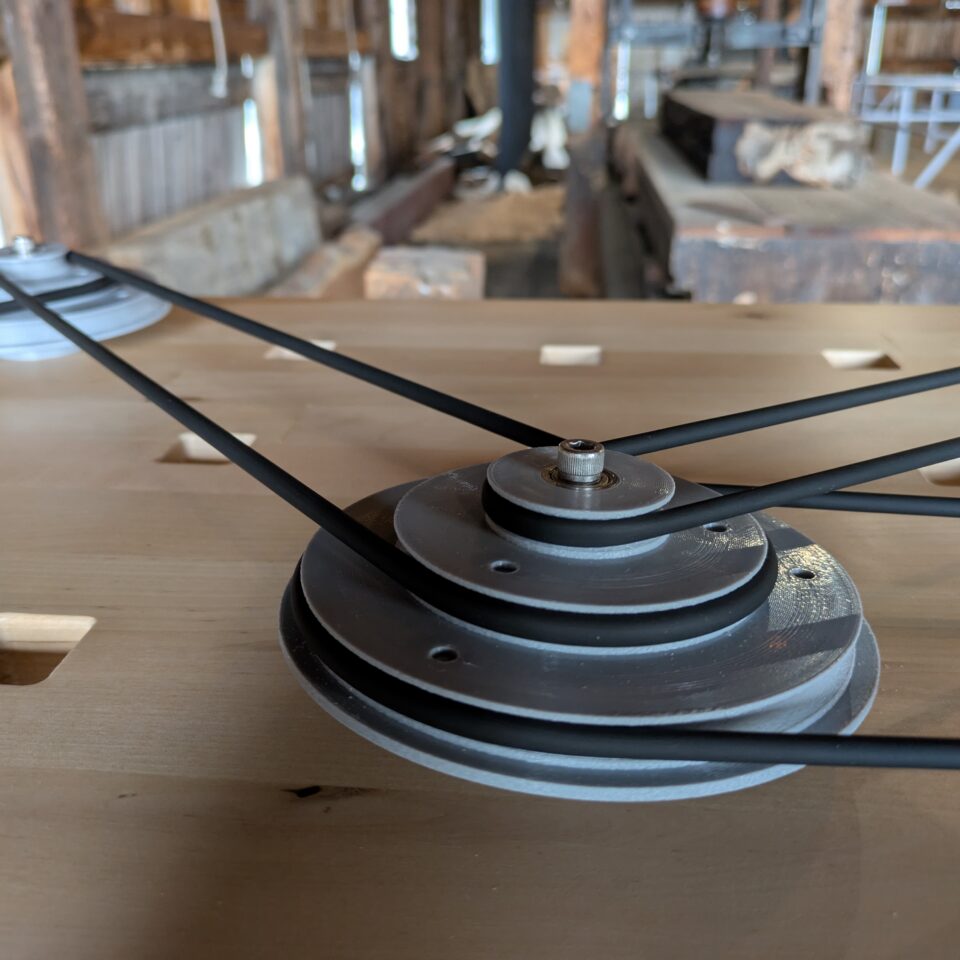
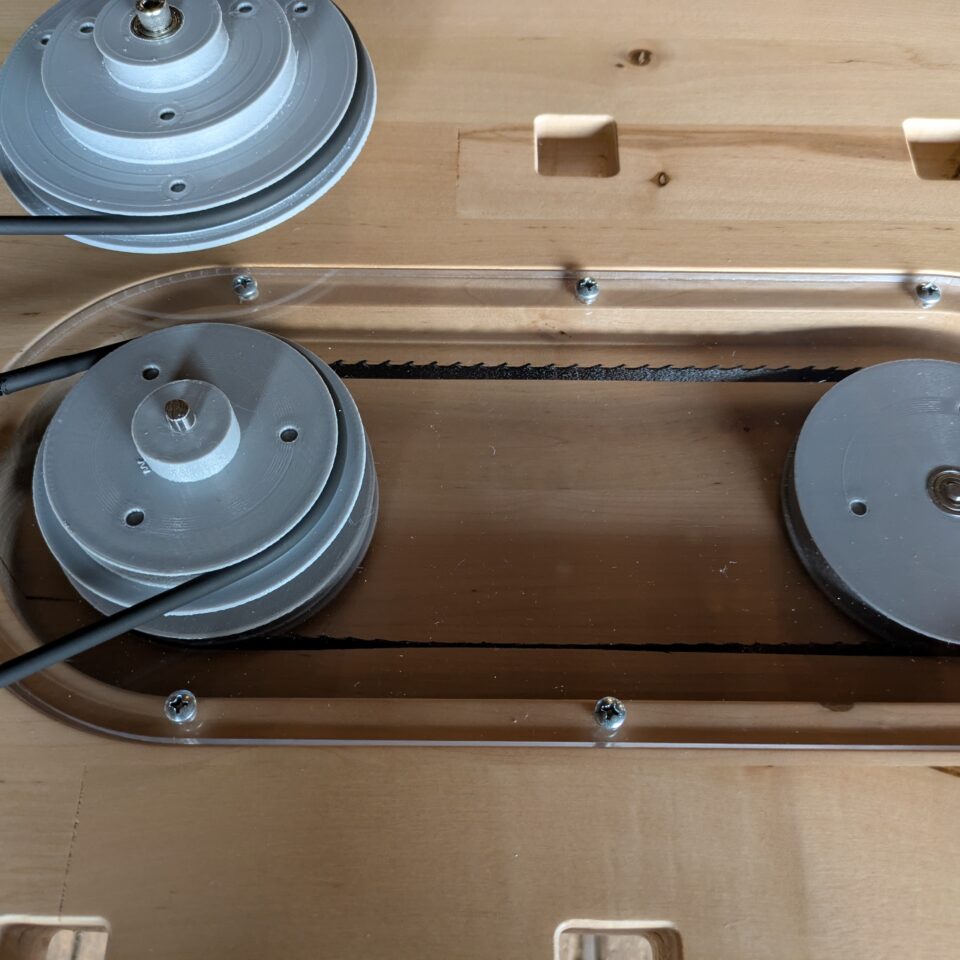
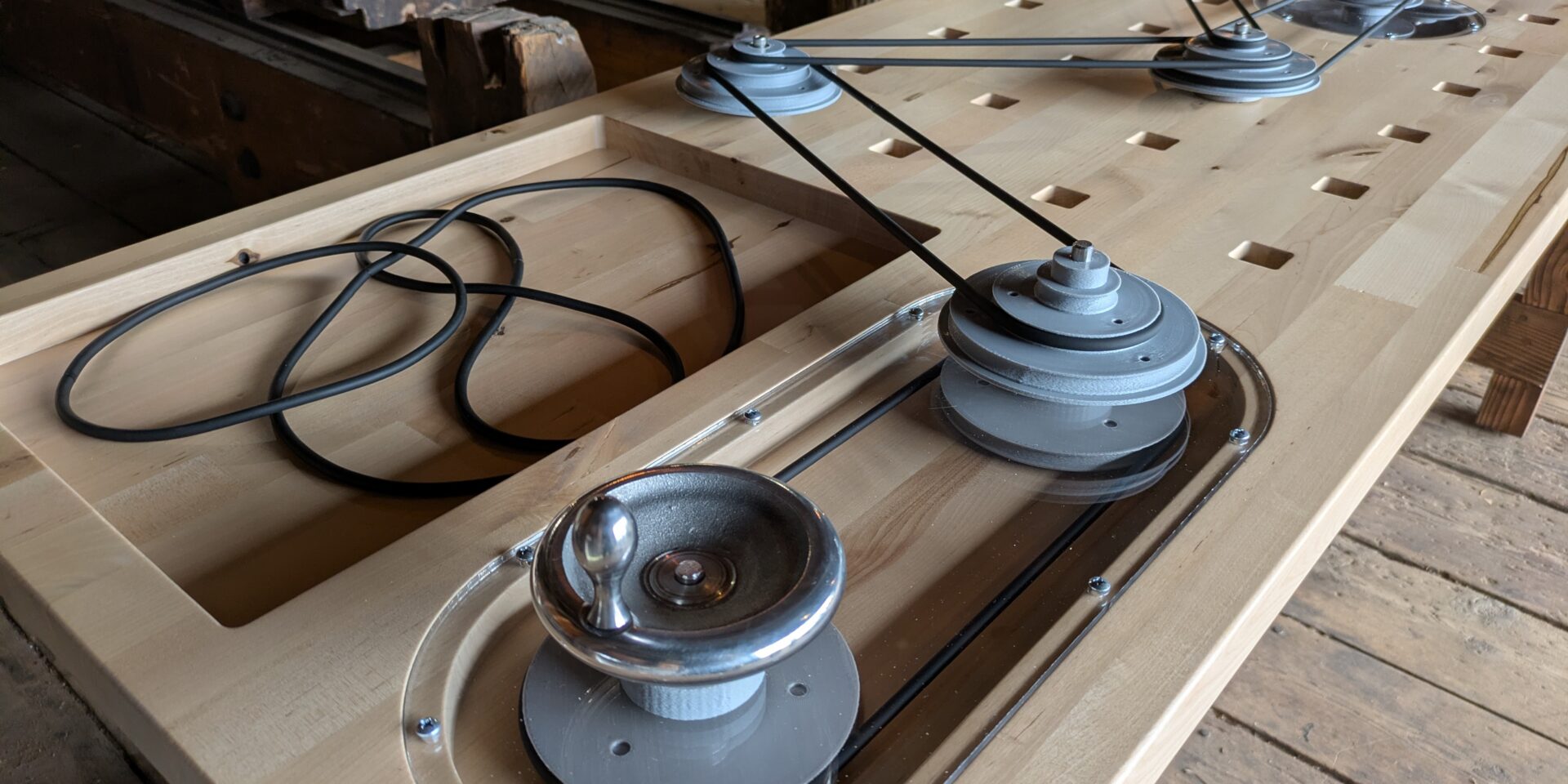
The massive tools in the sawmill were powered by a series of interconnected belts run by a single motor. We designed the pulley table to encourage visitors to learn about this system through play. Visitors can select several tiered idler wheels and place them anywhere on the table, connecting them with a series of belts that move when the crank is turned. Can you power both the embedded bandsaw and circular saw at once?

PXL_20260929_170312323
PXL_20260929_170320762
PXL_20260929_170355206